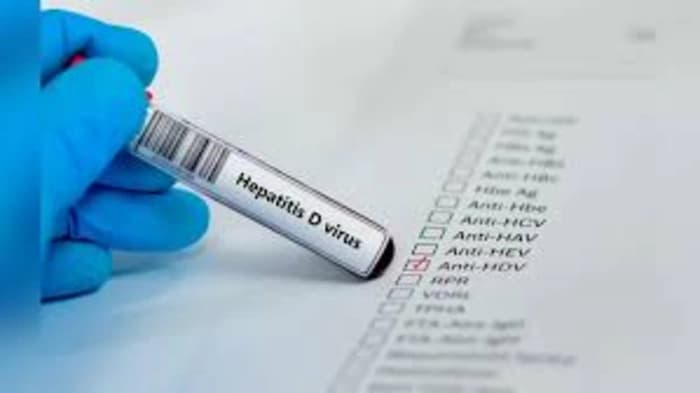
The World Health Organization (WHO) and the International Agency for Research on Cancer (IARC) have formally categorized the Hepatitis D virus (HDV) as carcinogenic, classifying it in Group 1 — recognized causes of liver cancer, together with Hepatitis B and C

What is the Hepatitis D Virus (HDV)?
Hepatitis D is a viral infection transmitted through blood that needs the Hepatitis B virus (HBV) to reproduce.

HDV cannot live on its own and appears as co-infection (at the same time as HBV) or superinfection (following an existing HBV).
Who Determined It to Be Carcinogenic?
Grouped by:
WHO (World Health Organization)
IARC (International Agency for Cancer Research)
Essential Characteristics of Hepatitis D and HBV Infection:
Impacts close to 12 million individuals, or approximately 5% of chronic HBV carriers worldwide.
Widespread occurrence in Asia, Africa, and the Amazon Basin. It likewise influences individuals who use injection drugs and those on dialysis.
Symptoms: Tiredness, yellowing of the skin, queasiness, stomach pain, dark-colored urine — frequently overlooked or incorrectly diagnosed.
Transmission: Via contaminated blood, unprotected sexual activity, unsafe injections, and vertical transmission (from mother to child).
Why HDV is Considered Cancer-Inducing?
Deteriorates HBV Results: Co-infection raises liver cancer risk by 2–6 times compared to HBV by itself.
Quick Liver Injury: As many as 75% progress to cirrhosis within 15 years, while only 50% do so in HBV-only instances.
Rapid Advancement: Accelerated onset of fibrosis and liver failure in younger demographics.
HDV takes control of HBV's replication system, increasing both viral and oncogenic levels.
Therapeutic Environment:
There is no vaccine specific to HDV, and the HBV vaccine is the sole preventive approach for both.
Bulevirtide (authorized in Europe) demonstrates potential when combined with pegylated interferon.
Lifelong antiviral treatment for HBV and therapies for HDV remain costly and restricted.
WHO highlights significant deficiencies in testing:
Just 13% of HBV and 36% of HCV cases have been identified.
Treatment rates are as low as 3% for HBV and 20% for HCV according to 2022 data.


US pushes Venezuelan oil to India as Russian crude imports plunge under tariff tensions

IIIT Delhi partners with Marvell to offer AI networking systems course

Fadnavis pledges unwavering support to NCP as Sunetra Pawar prepares to be sworn in Deputy CM

Dancing cop’s fall from grace: Indore police strip ‘moonwalking’ officer of rank amid misconduct probe

Delhi riots case: Court grants interim bail to Khalid Saifi for family wedding, Ramzan

US pushes Venezuelan oil to India as Russian crude imports plunge under tariff tensions

Fadnavis pledges unwavering support to NCP as Sunetra Pawar prepares to be sworn in Deputy CM

Vaishno Devi medical college scrapped, students dispersed across seven GMCs

UIDAI rolls out new Aadhaar app for privacy-first age verification

SC puts 2026 UGC equity rules on hold, flags ‘vague’ caste bias definition

US pushes Venezuelan oil to India as Russian crude imports plunge under tariff tensions

IIIT Delhi partners with Marvell to offer AI networking systems course

Fadnavis pledges unwavering support to NCP as Sunetra Pawar prepares to be sworn in Deputy CM

Dancing cop’s fall from grace: Indore police strip ‘moonwalking’ officer of rank amid misconduct probe

Delhi riots case: Court grants interim bail to Khalid Saifi for family wedding, Ramzan

US pushes Venezuelan oil to India as Russian crude imports plunge under tariff tensions

Fadnavis pledges unwavering support to NCP as Sunetra Pawar prepares to be sworn in Deputy CM

Vaishno Devi medical college scrapped, students dispersed across seven GMCs

UIDAI rolls out new Aadhaar app for privacy-first age verification

SC puts 2026 UGC equity rules on hold, flags ‘vague’ caste bias definition
Copyright© educationpost.in 2024 All Rights Reserved.
Designed and Developed by @Pyndertech