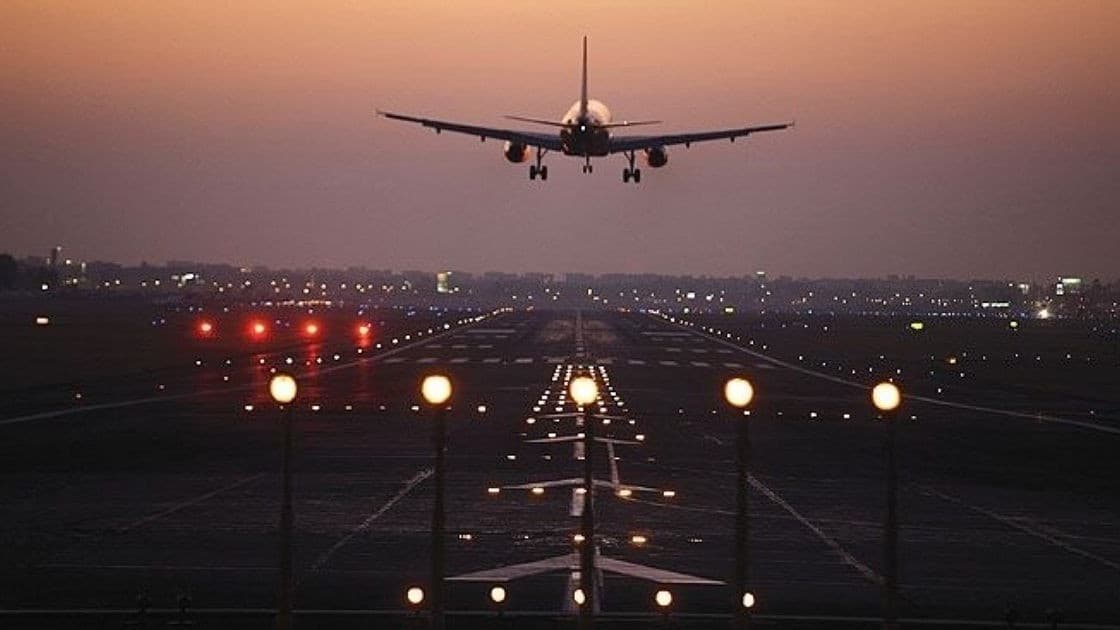
The Directorate General of Civil Aviation (DGCA) has issued a directive requiring commercial airlines, along with charter and private jet operators, to ensure that window shades remain closed during takeoff and landing at defense airports, except at emergency exit rows.
The instruction is specifically targeted at flights operating from military-run airfields, "particularly those near the western Indian border," and is intended for "strict compliance to enhance operational safety and prevent unintentional sharing of security-related information by the general public/crew."

The DGCA has cautioned that failure to adhere to these rules will result in legal consequences.
The directive follows the temporary suspension of operations under Operation Sindoor, which was initiated after the Pahalgam terror attack on April 22.
As a result, 32 airports in northern, central, and western India — many of which serve dual civilian-defense purposes — were briefly closed.
These included airfields in Srinagar, Jammu, Leh, Amritsar, Chandigarh, Gwalior, and Hindon. Although flight operations have resumed, concerns over security have prompted the DGCA to implement stricter regulations.
According to the DGCA, "These instructions shall apply post opening of Indian airspace for commercial operations to all scheduled, scheduled commuter, and non-scheduled aircraft operating from defense airfields: All passenger window shades, where applicable (except at emergency exit windows), shall remain closed during the take-off and landing phases specifically until the aircraft is airborne and has crossed an altitude of 10,000 feet during departure, or during arrival, it descends below 10,000 feet and reaches the parking bay at the civil terminal."
Under normal aviation protocols, window shades are typically kept open during takeoff and landing to allow passengers and crew to quickly assess external threats or emergencies.
However, this new measure overrides that norm at military-operated airfields due to heightened sensitivity.
The DGCA further emphasized that "aerial or ground photography and videography are strictly prohibited at all times during a passenger's travel, including when he or she is inside the terminal, in vehicles en route to or from the aircraft, outside the aircraft, during landing, at the airport, during pushback, taxiing, take-off, and while the aircraft is flying below 10,000 feet."
The directive mandates that "all operators must take necessary steps to ensure passengers are clearly informed and regularly reminded of the prohibition on photography and videography at military bases. Operators should also communicate the potential consequences of non-compliance, including regulatory or legal action as per applicable security protocols."
To ensure compliance, "mandatory pre-flight announcements must be made by the flight/cabin crew prior to take-off, before cabin securement, and before landing, instructing passengers to lower window shades where applicable (except at emergency exit windows) and refrain from photography/videography at all times below 10,000 feet. Operators are required to formulate standard operating procedures for their crew to address safety risks, including making announcements before takeoff, securing the cabin, and landing at all defense airports, particularly those near the western Indian border," the DGCA added.