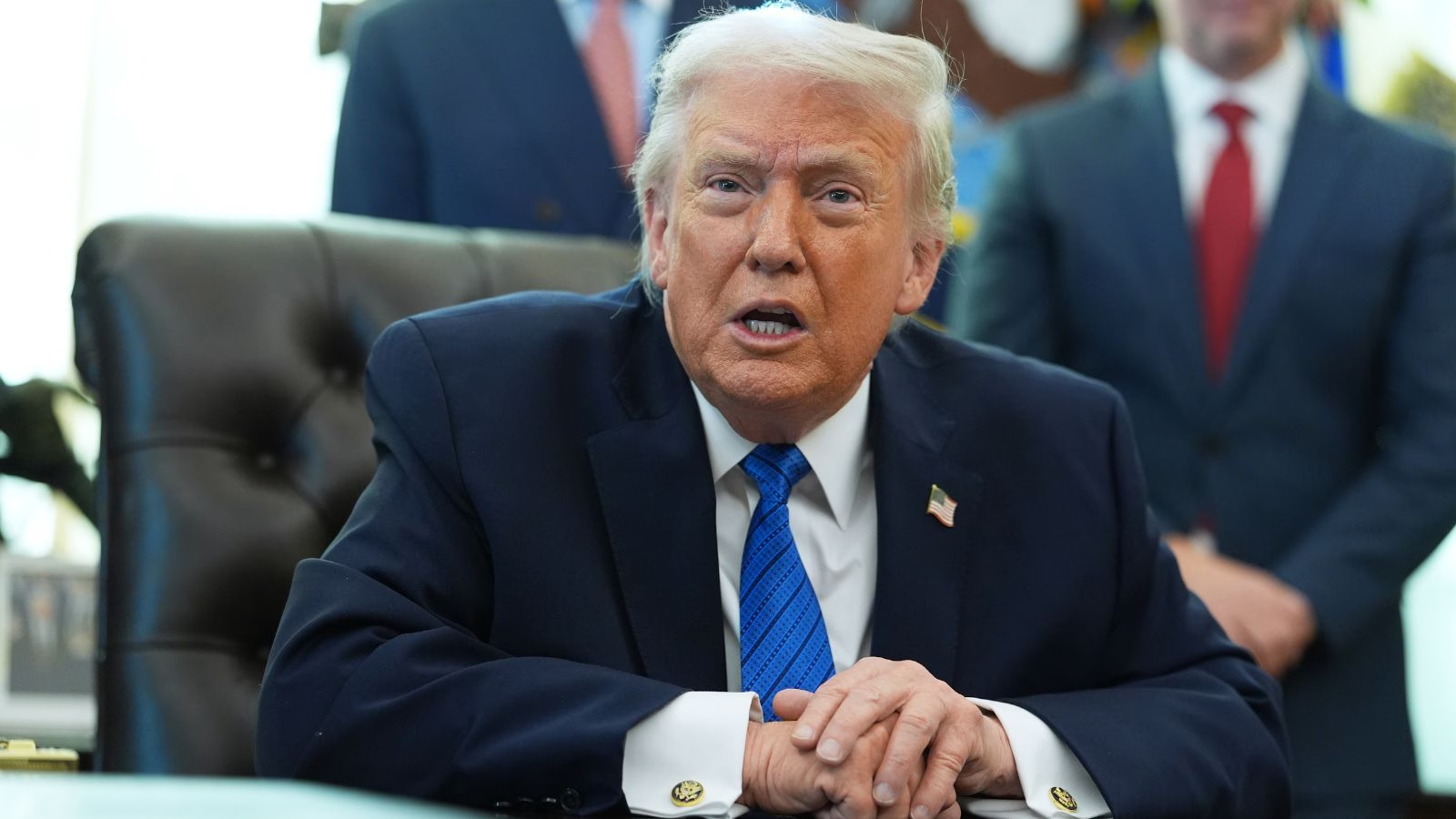
President Donald Trump is scheduled to host Field Marshal General Asim Munir, Pakistan’s Chief of Army Staff, for a private lunch at the White House Cabinet Room on June 18, marking the first such engagement in 15 years.
While no official agenda has been released, discussions are expected to focus on strategic issues including regional security, counterterrorism cooperation, and forging deeper military and economic ties.

The meeting coincides with growing tensions in the Middle East—particularly the Israel–Iran conflict—with Pakistan signaling its support for Iran and courting US interests.
Public reaction has been mixed: while commentators frame the meeting as a potential diplomatic breakthrough, protests from Pakistani diaspora groups in Washington are already voicing concerns about the General’s human rights record and democratic accountability.
General Munir’s official five-day visit builds on earlier praise from CENTCOM commander General Michael Kurilla, who recently described Pakistan as a “phenomenal partner” in counterterrorism efforts—particularly against ISIS‑K.
The General is also expected to meet other senior US officials, including Secretary of State Marco Rubio and Defense Secretary Pete Hegseth.
This engagement highlights a notable shift in US–Pakistan relations, with Trump’s administration signaling openness to rebuilding military ties that had been paused under previous US leadership due to terrorism-related tensions.
For Islamabad, the meeting offers a strategic opening beyond its longtime alignment with China, particularly as it seeks US interest in its mineral and economic sectors.
Overall, the White House luncheon is being watched closely as it could signal a broader recalibration in regional security dynamics.
US policymakers appear intent on strengthening alliances in South Asia while balancing India’s interests and navigating Middle Eastern volatility.



.jpg&w=3840&q=75)