In a landmark overhaul of India’s indirect tax framework, the Goods and Services Tax (GST) Council has cleared sweeping reforms under the eight-year-old regime, streamlining the system into a broad two-slab structure and delivering significant relief to households and businesses alike.
After a marathon 10.5-hour session — its 56th meeting — the Council, chaired by Union Finance Minister Nirmala Sitharaman and attended by representatives from 31 states and Union Territories, approved a simplified tax structure of 5% and 18%, alongside a 40% “demerit rate” for luxury and sin goods such as tobacco and pan masala.

All changes, except for tobacco-related items, will take effect from September 22, the first day of Navratri.
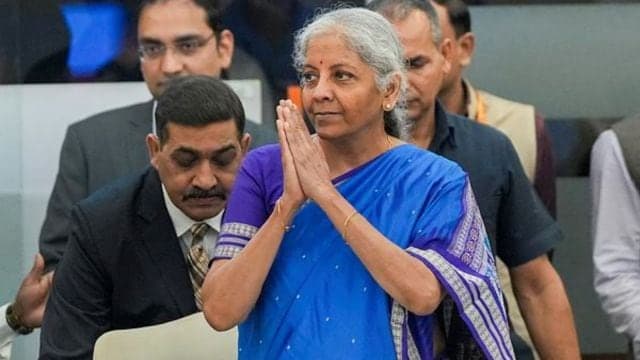
“This reform is not just about rationalizing rates; it is about structural stability, ease of doing business, and ease of living,” Sitharaman said, underscoring that the cuts are aimed squarely at reducing the burden on the common man, farmers, small traders, and labour-intensive industries.
Among the biggest takeaways:
- No GST on individual health or life insurance — covering term, endowment, ULIP, family floaters, and senior citizen policies.
- Massive rate cuts on daily essentials — shampoos, soaps, toothpaste, hair oil, bicycles, kitchenware, and tableware will now attract just 5% GST.
- Cheaper packaged food and medical items — fruit juices, butter, cheese, pasta, bandages, diagnostic kits, and medical oxygen shifted to lower slabs. Ultra-high temperature milk, paneer, roti, khakra, and erasers will face zero GST.
- Relief for middle-class buyers — small cars and motorcycles (under 350cc) moved to the 18% slab, while large cars and SUVs face 40%. White goods like ACs, TVs, and dishwashers will now draw 18% instead of 28%.
- Tax relief for gyms, salons, barbers, and yoga centres, with GST cut to 5% from 18%.
Prime Minister Narendra Modi hailed the consensus, calling the reforms “historic” and promising they would improve lives, ease compliance, and bolster growth for MSMEs and the middle class.
While states had flagged concerns over potential revenue losses — estimated at ₹80,000 crore to ₹1.5 lakh crore — the Centre pegged the net fiscal impact at ₹48,000 crore, stressing that the overhaul was “fiscally sustainable.”
Industry bodies too welcomed the reforms. The Confederation of Indian Industry (CII) called the move “pathbreaking,” saying lower rates would ease compliance, cut litigation, and stimulate demand, with businesses committed to passing benefits directly to consumers.
By scrapping multiple slabs and resolving inverted duty structures in sectors like textiles and fertilizers, GST 2.0 marks the most far-reaching reform since its rollout in 2017 — promising not just tax relief, but also predictability, stability, and renewed momentum for India’s economy.





%20Preeti%20Lobana%2C%20Sh.%20Jayant%20Chaudhary%2C%20Chris%20Phillips.jpeg&w=256&q=75)