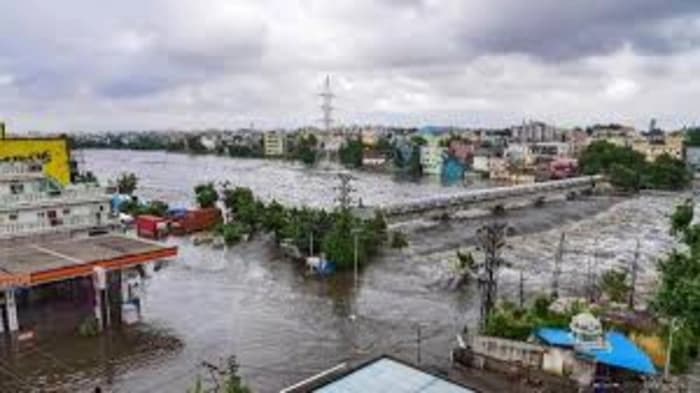
Post-monsoon reviews in December 2026 once again highlighted recurrent urban flooding across major Indian cities. The assessments linked flooding incidents to increased climate variability and extreme rainfall events, compounded by unplanned urbanisation, encroachment of wetlands and floodplains, and outdated or inadequate storm-water drainage systems. Poor solid-waste management leading to clogged drains further aggravated the problem, resulting in economic losses, infrastructure damage and public health risks.
Key factors contributing to urban flooding
- Climate change impacts:
Higher frequency of short-duration, high-intensity rainfall events. - Urban planning failures:
Reduction of natural drainage channels due to encroachment and land-use changes. - Infrastructure deficits:
Inadequate capacity of storm-water drains and lack of regular maintenance. - Governance issues:
Fragmented institutional responsibilities and weak enforcement of planning norms.
Way forward
Cities must adopt nature-based solutions such as wetland restoration, permeable surfaces and urban green spaces, alongside upgrading drainage infrastructure. Integrating flood-risk mapping, climate data, and inter-agency coordination within urban local bodies is crucial for long-term resilience.






%20Preeti%20Lobana%2C%20Sh.%20Jayant%20Chaudhary%2C%20Chris%20Phillips.jpeg&w=256&q=75)