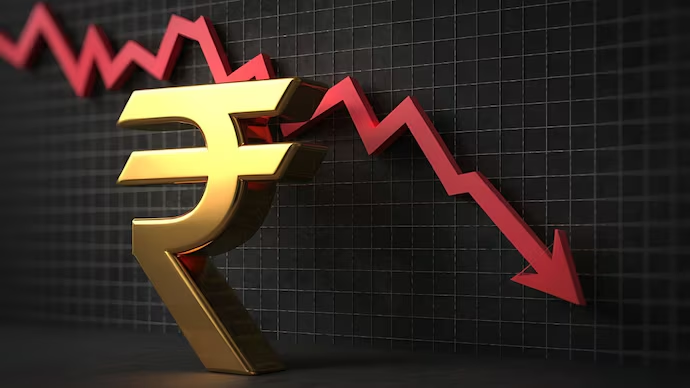
India's construction sector is undergoing an unprecedented boom, driven by economic growth, urbanization, and improved living standards. While this surge presents significant economic opportunities, it also poses environmental challenges, particularly concerning energy inefficiency in residential buildings. As the nation strives to address these challenges, initiatives aimed at promoting energy efficiency have emerged as a critical focus area.
Importance of Addressing Energy Inefficiency
India's rapid economic growth has led to a surge in energy and cooling demand, exacerbated by factors such as urban heat islands and climate change. The construction sector, which witnesses over 300,000 housing units erected annually, accounts for a substantial portion of electricity usage, contributing to environmental degradation and climate change. Furthermore, the India Cooling Action Plan forecasts a significant increase in cooling demand, highlighting the urgency of addressing energy inefficiency in buildings.

Initiatives to Promote Energy Efficiency
Several initiatives have been implemented to promote energy efficiency in India's construction sector. One such initiative is the Eco-Niwas Samhita (ENS), an Energy Conservation Building Code for Residential Buildings launched by the Ministry of Power. ENS aims to enhance energy efficiency in residential buildings by setting standards for design and construction, with a focus on reducing heat transfer through building envelopes.
Additionally, the Energy Conservation Building Code (ECBC) sets minimum energy standards for commercial buildings, with the aim of achieving significant energy savings. The code emphasizes renewable energy integration and passive building design strategies to enhance efficiency while offering flexibility for designers.
Pathways for Energy Efficiency
To further enhance energy efficiency in the construction sector, several pathways can be explored. Utilizing innovative building materials such as Autoclaved Aerated Concrete (AAC) blocks, which exhibit superior thermal efficiency, can significantly contribute to energy savings. Interdisciplinary collaborations can foster the development of sustainable building materials and practices, aligning with environmental goals.
Promoting sustainable practices and embracing smart building systems are also essential for optimizing energy consumption. Smart building systems, including Artificial Intelligence and IoT, can intelligently adjust HVAC systems based on occupancy, minimizing energy consumption while ensuring occupant comfort. Additionally, embracing 3D printing for creating energy-efficient building components can reduce material waste and enhance efficiency.
Conclusion
Enhancing energy efficiency in India's construction sector is paramount for achieving sustainable development goals. While challenges exist, initiatives such as ENS and ECBC demonstrate significant progress in promoting energy efficiency. By embracing innovative technologies, sustainable practices, and collaborative efforts, India can pave the way for a more energy-efficient and environmentally sustainable future in the construction sector.





%20Preeti%20Lobana%2C%20Sh.%20Jayant%20Chaudhary%2C%20Chris%20Phillips.jpeg&w=256&q=75)