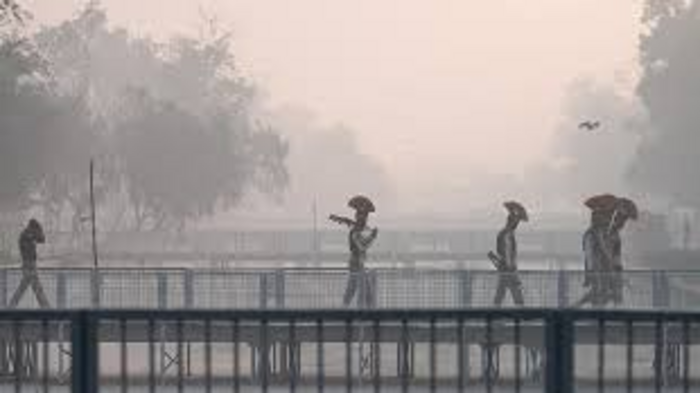
Air quality across the Delhi–NCR region showed noticeable improvement, shifting to the “Poor” category after several weeks of remaining in the “Very Poor” and “Severe” ranges. The improvement follows the implementation of emergency pollution control measures by central and state authorities to curb emissions during peak winter pollution conditions.
Key interventions included the enforcement of odd-even vehicle restrictions, temporary bans on construction and demolition activities, and stricter regulation of industrial emissions. Public transport services were augmented, with additional buses and metro services deployed to reduce reliance on private vehicles. Authorities also intensified checks on polluting vehicles and discouraged the use of diesel generators except for essential services.

According to air quality monitoring agencies, the combined impact of reduced vehicular emissions, curbs on dust-generating activities and favourable meteorological conditions contributed to the short-term improvement. Increased wind speed and changes in atmospheric mixing helped disperse accumulated pollutants, leading to lower concentrations of particulate matter (PM2.5 and PM10).
However, experts and officials have cautioned that the relief may be temporary. Winter conditions in north India, characterised by low wind speeds, temperature inversion and high humidity, continue to create unfavourable conditions for pollutant dispersion. As a result, any relaxation of control measures or adverse weather changes could quickly reverse the gains.
Health authorities have advised residents to remain cautious, as “Poor” air quality can still cause discomfort to people with respiratory ailments, children and the elderly. Citizens have been encouraged to limit outdoor activities during early morning and late evening hours and to use public transport wherever possible.
The episode has once again highlighted the need for sustained, long-term solutions such as cleaner mobility, dust control, transition to cleaner fuels and regional coordination beyond emergency responses. While the recent improvement offers temporary relief, experts stress that structural measures are essential to ensure lasting improvements in air quality across the Delhi–NCR region.





%20Preeti%20Lobana%2C%20Sh.%20Jayant%20Chaudhary%2C%20Chris%20Phillips.jpeg&w=256&q=75)