What does Uranium Contamination mean?
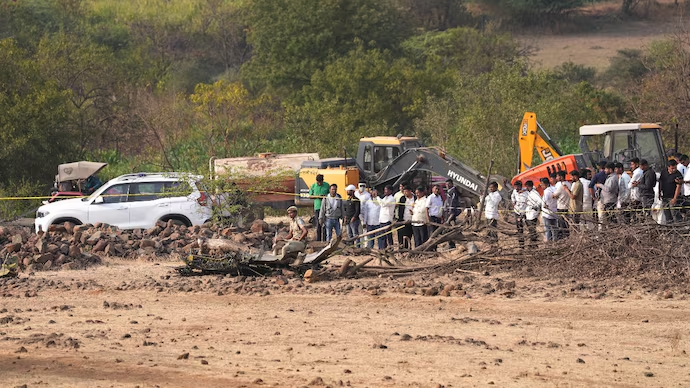
Uranium contamination indicates high concentrations of uranium in the environment, mainly in water and soil, surpassing safe thresholds.

Prescribed Safe Limits:
Organización Mundial de la Salud (OMS): Límite seguro de uranio: 0.03 mg/L.
Bureau of Indian Standards (BIS): Adopts 0.03 mg/L as allowable limit.
Health Effects: Uranium pollution presents dangers from its radioactivity as well as its toxic chemical properties.
Consuming contaminated water or food may result in Chronic Kidney Disease (CKD), bone impairment, cancers, and reproductive health problems.
Uranium Pollution in India
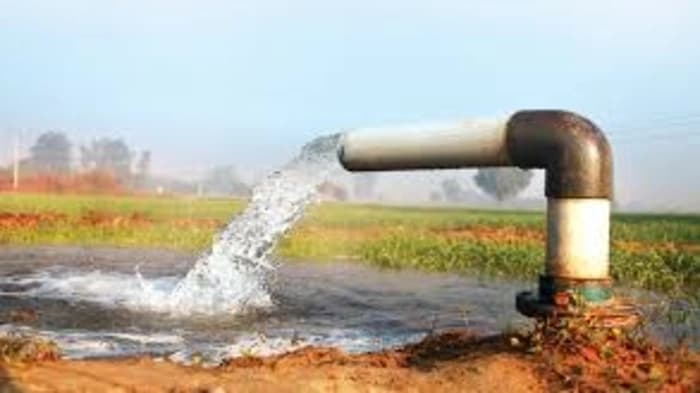
As per the Central Ground Water Board (CGWB) survey conducted in 2019–20, of almost 16,000 groundwater samples, roughly 450 surpassed the permissible limit set by the World Health Organization (WHO).
Uranium pollution is said to be more common in the alluvial aquifers of northwest India and in the hard-rock aquifers of southern India.
The states of Punjab, Haryana, Rajasthan, Telangana, Andhra Pradesh, Madhya Pradesh, and Gujarat were identified as the most impacted.
Origins of Contamination
Natural Sources: Uranium is a naturally occurring radioactive element that exists in the Earth's crust.
Geogenic activities, like the breakdown of uranium-rich rocks and the flow of groundwater, may introduce uranium into water supplies.
Sources of Human Origin:
Groundwater depletion: Reduces the water table and changes aquifer chemistry, resulting in uranium release.
Industrial Processes: Certain industrial processes, such as those related to phosphate fertilizers and nuclear plants, may also emit uranium.
Mining and Milling: The extraction and processing of uranium can discharge uranium into the nearby surroundings.
Actions by Authorities
The Bhabha Atomic Research Centre (BARC) and the Department of Atomic Energy (DAE) have created hybrid membrane methods and Reverse Osmosis (RO) plants, which have been set up in affected regions of Punjab and Haryana as part of a pilot project.
Through the National Aquifer Mapping and Management Programme (NAQUIM), the CGWB is producing scientific information to comprehend aquifer dynamics and offer tailored solutions to reduce contamination threats.
The Council of Scientific and Industrial Research (CSIR) has been focused on creating affordable adsorbents and nanomaterials for extracting uranium from groundwater.
India has partnered with the International Atomic Energy Agency (IAEA) to enhance capabilities and technical knowledge in overseeing uranium concentrations in drinking water and improving laboratory facilities.
Judicial Involvement
In 2015, the Punjab and Haryana High Court recognized uranium pollution in the area's groundwater and ordered the state governments to implement corrective measures.
In Subhash Kumar v. State of Bihar and Others (1991), the Supreme Court of India determined that the right to life encompassed by Article 21 of the Constitution includes the entitlement to unpolluted water and air.
Path Forward
The government ought to officially acknowledge uranium as a significant groundwater pollutant, akin to arsenic and fluoride, enabling targeted funding and interventions to be organized efficiently.
Campaigns aimed at public awareness should be implemented to inform rural populations about the health dangers posed by uranium contamination and the proper practices for using safe water.
Affordable, distributed treatment technologies like adsorption filters, ion-exchange systems, and community-based RO plants ought to be implemented extensively in impacted villages.





%20Preeti%20Lobana%2C%20Sh.%20Jayant%20Chaudhary%2C%20Chris%20Phillips.jpeg&w=256&q=75)