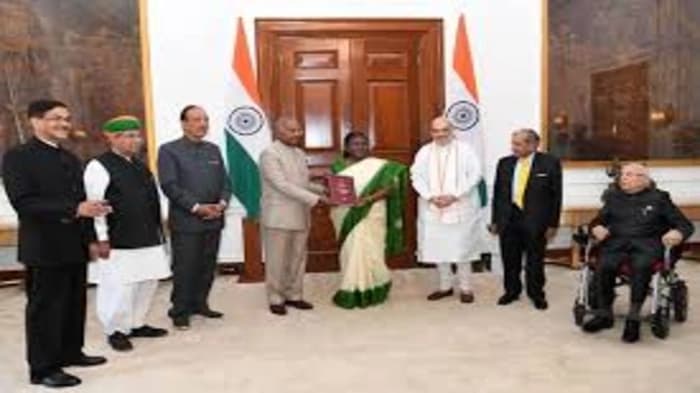
The debate on Simultaneous Elections—popularly known as One Nation, One Election (ONOE)—has re-intensified with the circulation of the High-Level Committee (HLC) Report for public consultation. Chaired by a former President of India, the Committee’s report examines the constitutional, administrative, financial, and logistical aspects of synchronising Lok Sabha, State Assemblies, and local body elections in a single electoral cycle.
At the heart of the proposal lies a complex set of constitutional amendments, especially to Articles 83, 85, 172, 174, and provisions related to emergency, hung assemblies, and premature dissolutions. A major recommendation is creating a constructive vote of no confidence—requiring that no government can be dismissed unless an alternative majority is simultaneously proposed—to ensure continuity of legislatures. The Committee also explores fixed-term legislatures with limited exceptions, requiring broad political consensus, including ratification by at least half the states.

From the fiscal perspective, the argument for ONOE is significant. Conducting elections every year imposes recurring costs on exchequer, security forces, and administrative machinery. Synchronisation, the report notes, could generate substantial fiscal savings, reduce diversion of personnel for election duty, and allow uninterrupted delivery of welfare schemes and developmental programs. Private sector productivity could also benefit from fewer prohibitions arising from the Model Code of Conduct (MCC).
The key challenge, however, is logistical feasibility. Implementing simultaneous elections would require massive investment in EVMs/VVPATs, storage facilities, and training of personnel. Deployment of central and state police forces on a single nationwide scale poses planning challenges. Additionally, coordinating election schedules across 28 states and 8 UTs—many with fragile coalition governments—remains a major concern.
Critics caution that ONOE may weaken federal autonomy by centralising political cycles, while supporters argue it strengthens governance stability and reduces populist pressures.





%20Preeti%20Lobana%2C%20Sh.%20Jayant%20Chaudhary%2C%20Chris%20Phillips.jpeg&w=256&q=75)