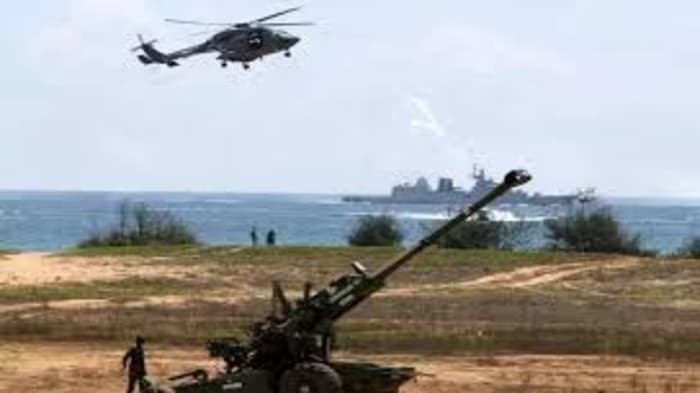
The traditional model of separate service commands (Army, Navy, Air Force) operating largely in silos is increasingly outdated in the face of modern conflict dynamics. Warfare today spans multiple domains, including:
Land, Sea, and Air: Conventional battlefields remain critical but are now integrated with other domains.

Cyber and Space: These emerging domains play vital roles in intelligence, surveillance, communication, and attack capabilities.
Information Warfare: Psychological operations, misinformation campaigns, and electronic warfare are frontline strategies.
India faces asymmetric threats, hybrid warfare tactics, drone swarms, and cyber intrusions that demand rapid, coordinated responses transcending service boundaries. Insights IAS highlights that siloed command structures hinder agility, situational awareness, and resource optimization, making integrated theatre commands a strategic necessity.
Reform Agenda: Theatre Commands
The Prime Minister’s address at the 2025 Combined Commanders’ Conference strongly advocated shifting away from service-specific command structures toward geographically unified theatre commands.
Key features of this reform include:
Unified Geographic Responsibility: Commands organized by strategic zones—such as Northern, Eastern, and Western theatres—covering all military domains and services operating in that area.
Jointness and Synergy: Promoting inter-service collaboration through shared command and control (C2) mechanisms, unified logistics, and integrated operational planning.
Streamlined Decision-Making: Reducing bureaucratic layers and enabling commanders with direct authority over all forces within their theatre for swift, coherent action.
Shared Assets and Intelligence: Maximizing use of multi-service platforms, surveillance systems, and intelligence-sharing to enhance operational effectiveness.
These reforms aim to ensure India’s armed forces are more responsive, flexible, and coordinated when Institutional Hurdles & Way Ahead
Despite the strategic logic, transitioning to integrated theatre commands involves overcoming significant challenges:
1. Resistance to Change
Each service has traditionally guarded its command prerogatives, resource control, and cultural identity. Resistance from entrenched institutional interests, concerns over dilution of service-specific authority, and turf protection are major hurdles.
2. Doctrine and Interoperability
Harmonizing service doctrines, communication protocols, and operational procedures is critical. Establishing common standards and joint training will be necessary to ensure seamless interoperability.
3. Phased Implementation
A gradual, phased rollout is advisable—beginning with limited-area or domain-specific commands, such as coastal or maritime commands and border defence sectors—before extending to full-spectrum theatre commands.
4. Legal, Budgetary, and Personnel Reforms
New rules of engagement must be framed to govern joint command authority. Budget allocations and procurement processes need integration, alongside the creation of joint promotion pathways and personnel management systems that encourage cross-service careers.
Conclusion
Integrated theatre commands represent a vital reform for India’s defence apparatus to keep pace with the evolving character of warfare. By fostering jointness, optimizing resources, and accelerating decision-making, these commands can strengthen India’s deterrence and operational effectiveness. However, realizing this vision will require strong political will, institutional consensus, and incremental implementation. Successfully navigating these challenges can position India to better meet 21st-century security challenges with agility and unified strength.