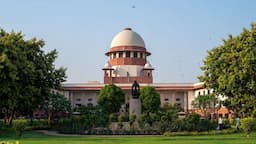
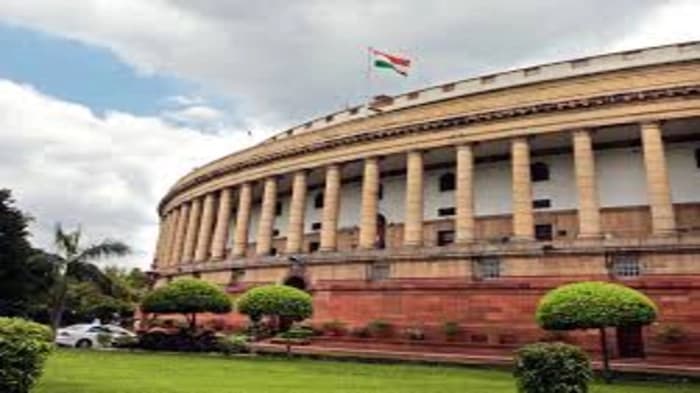
Year-end reviews of parliamentary functioning highlighted important trends in India’s legislative process, bringing into focus the tension between law-making efficiency and the principles of deliberative democracy. While Parliament continued to pass a significant volume of legislation, concerns were raised about limited debate durations, frequent resort to ordinances, and evolving patterns of legislative scrutiny.
In recent years, many Bills have been passed with relatively short discussions in both Houses. While expedited law-making can ensure policy continuity and administrative efficiency, inadequate debate limits Parliament’s ability to examine the social, economic, and constitutional implications of legislation. Parliamentary debate remains a core mechanism through which diverse viewpoints are expressed and the executive is held accountable.

Another concern flagged in the reviews was the frequent use of ordinances. The ordinance-making power, intended as an emergency provision, has increasingly been used to bypass immediate parliamentary scrutiny. Repeated promulgation and re-promulgation of ordinances raise questions about the balance of power between the executive and the legislature and the spirit of constitutional governance.
At the same time, parliamentary standing committees have assumed greater importance in legislative scrutiny. Committees provide a forum for detailed examination of Bills, expert consultations, and bipartisan deliberation, contributing to better-quality legislation. However, the proportion of Bills referred to committees has fluctuated, limiting their potential impact.
These developments have significant implications for democratic accountability. Parliament is not merely a law-making body but a deliberative institution central to executive oversight, financial control, and representation of public interests. Weakening debate and scrutiny risks reducing Parliament to a formal approval mechanism rather than an active democratic forum.
Strengthening legislative accountability requires institutional reforms. Ensuring adequate debate time, limiting ordinance use to genuine emergencies, mandating committee referral for major Bills, and enhancing research and staffing support for MPs can improve legislative outcomes. Greater transparency and public engagement can also reinforce democratic legitimacy.
In conclusion, reconciling efficiency with deliberation is essential for a healthy parliamentary democracy. A strong committee system and meaningful debate are indispensable for ensuring accountable governance and high-quality law-making.





%20Preeti%20Lobana%2C%20Sh.%20Jayant%20Chaudhary%2C%20Chris%20Phillips.jpeg&w=256&q=75)