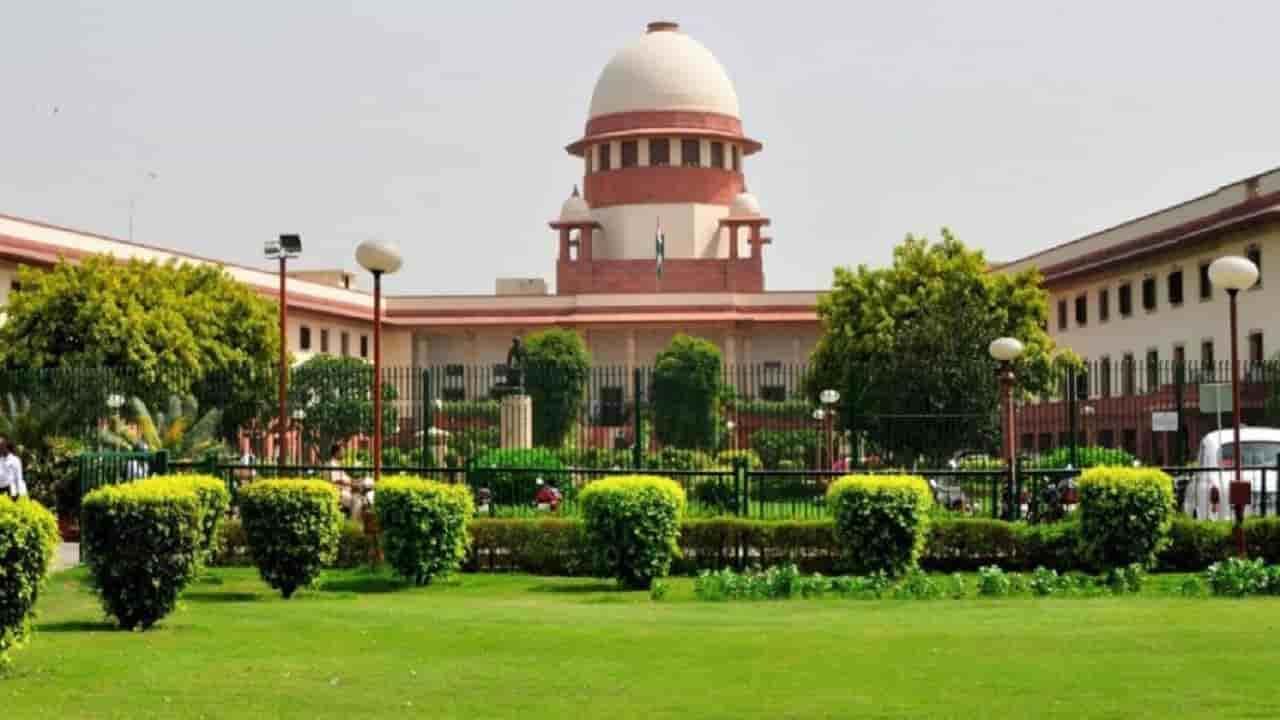
The Supreme Court has issued strict directions against three individuals involved in drafting a controversial section on “corruption in the judiciary” in a Class 8 NCERT textbook, saying that they should not be associated with curriculum development or textbook preparation in the future.
Hearing a suo motu case related to the content of the political science chapter, the court examined whether the material misrepresented the functioning of the Indian judiciary and whether due procedures were followed in its preparation and approval.

After reviewing the matter, the court directed the union government, state governments, universities, and all institutions receiving public funds to disassociate from the three individuals and not engage them for any publicly funded academic work.
The court also reviewed the steps taken by the National Council of Educational Research and Training to revise the controversial chapter.
During the hearing, the bench expressed dissatisfaction with the affidavit submitted by the NCERT director. The affidavit stated that Chapter IV of the textbook had already been rewritten and would be implemented in the next academic session.
However, the court noted that the affidavit did not clarify key aspects of the revision process, including the identities of the subject experts who rewrote the chapter, who approved the revised version, and what procedure was followed before including it in the curriculum.
The court described the response as “disturbing” and said the revision of such an important academic chapter required greater transparency.
The court also examined how the original chapter had been prepared. According to submissions presented during the hearing, the chapter was drafted by a textbook development team headed by a visiting professor.
Two individuals, Suparna Diwakar and Alok Prasanna Kumar, were associated with the visiting professor during the drafting process.
The court was informed that the draft curriculum was expected to be reviewed by the National Syllabus and Textbook Committee, a body comprising 19 members. However, the controversial chapter was reportedly not presented before the full committee.
Instead, it was circulated digitally among only a few members, bypassing the standard review mechanism.
The CJI made strong remarks about the authors linked to the chapter. The court observed that Professor Michel Danino, Suparna Diwakar, and Alok Prasanna Kumar either lacked reasonable knowledge of the Indian judiciary or deliberately misrepresented facts, creating a negative portrayal of the institution for Class 8 students.
The bench stressed that students at such an impressionable age should not be exposed to distorted or misleading descriptions of constitutional institutions.
As part of its order, the court directed that the union government, state governments, and publicly funded institutions must disassociate from the three individuals.
They should not be engaged for services involving payment from public funds and should not participate in curriculum design or textbook preparation in the future.
During the hearing, the Chief Justice also expressed concern about the possibility of such individuals holding leadership roles in academic institutions.
"What if they are made Vice-Chancellor of a university at some point? That will affect thousands of students," the court observed.
The court clarified that the individuals may approach the Supreme Court seeking modification of the order after submitting their response.
The bench also issued directions regarding the rewriting of the chapter. It asked NCERT to ensure that the revised content is prepared through a structured and expert-driven process.
According to the order, the rewriting must involve a committee that includes a retired judge, a practicing advocate, and a senior academician. The committee may also seek assistance from the National Judicial Academy in Bhopal to ensure factual accuracy and institutional balance.
The court said these measures are necessary to maintain academic accountability and ensure that school curriculum material presented to students remains accurate and responsibly reviewed.