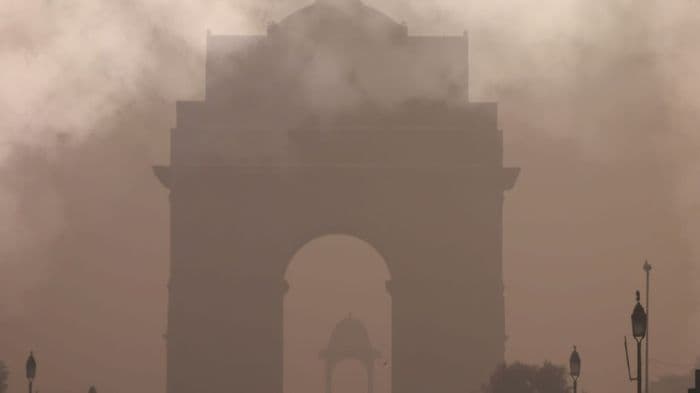
From January to June 2025, Delhi registered an average PM₂.₅ concentration of 87 µg/m³, making it the second most polluted city in India, according to an analysis by the independent research group Centre for Research on Energy and Clean Air (CREA).
The town of Byrnihat, situated on the Assam–Meghalaya border, led the rankings with a staggering 133 µg/m³ average, earning the unwelcome distinction of being the most polluted urban area in the country during this period.

Delhi breached the World Health Organization’s (WHO) annual PM₂.₅ safety limit of 5 µg/m³ by January 10 and surpassed the National Ambient Air Quality Standard (NAAQS) of 40 µg/m³ by June 5, making compliance for the year impossible—even if pollution levels drop sharply later on.
By mid‑2025, over 88% of 293 monitored Indian cities had already exceeded WHO’s guidelines, and 122 cities surpassed the national standard.
Experts highlight that Delhi’s air crisis is multi-sectoral. While contributions from vehicles (17–28%) and dust (17–38%) are significant, other persistent sources include industrial emissions and thermal power plants (22–30%), residential biomass combustion (8–10%), and agricultural burning (4–7%), as reported by studies from IIT Delhi and PRANA.
Moreover, enforcement lapses remain acute—despite Supreme Court directives, only 2 out of 11 thermal power plants within 300 km of Delhi have installed working Flue Gas Desulfurization (FGD) units, reducing the efficacy of vehicle-based emission controls.
Among the top polluted cities in India, others included Ghaziabad, Gurgaon, Hajipur, Patna, Sasaram, Talcher, Rourkela, and Rajgir . In contrast, the cleanest city was Aizawl, Mizoram, with an average PM₂.₅ of just 8 µg/m³—still above the WHO guideline but far cleaner than hotspots like Delhi and Byrnihat .
Efforts to curb pollution under the National Clean Air Programme (NCAP) have had limited impact so far.
Analysts argue that tackling vehicular emissions alone will not resolve the problem, while broader regulatory failures—such as unpenetrated audits, inactive emission controls in industries, and dispersed residential pollution—persist across regions .





%20Preeti%20Lobana%2C%20Sh.%20Jayant%20Chaudhary%2C%20Chris%20Phillips.jpeg&w=256&q=75)