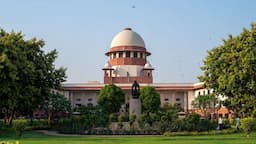
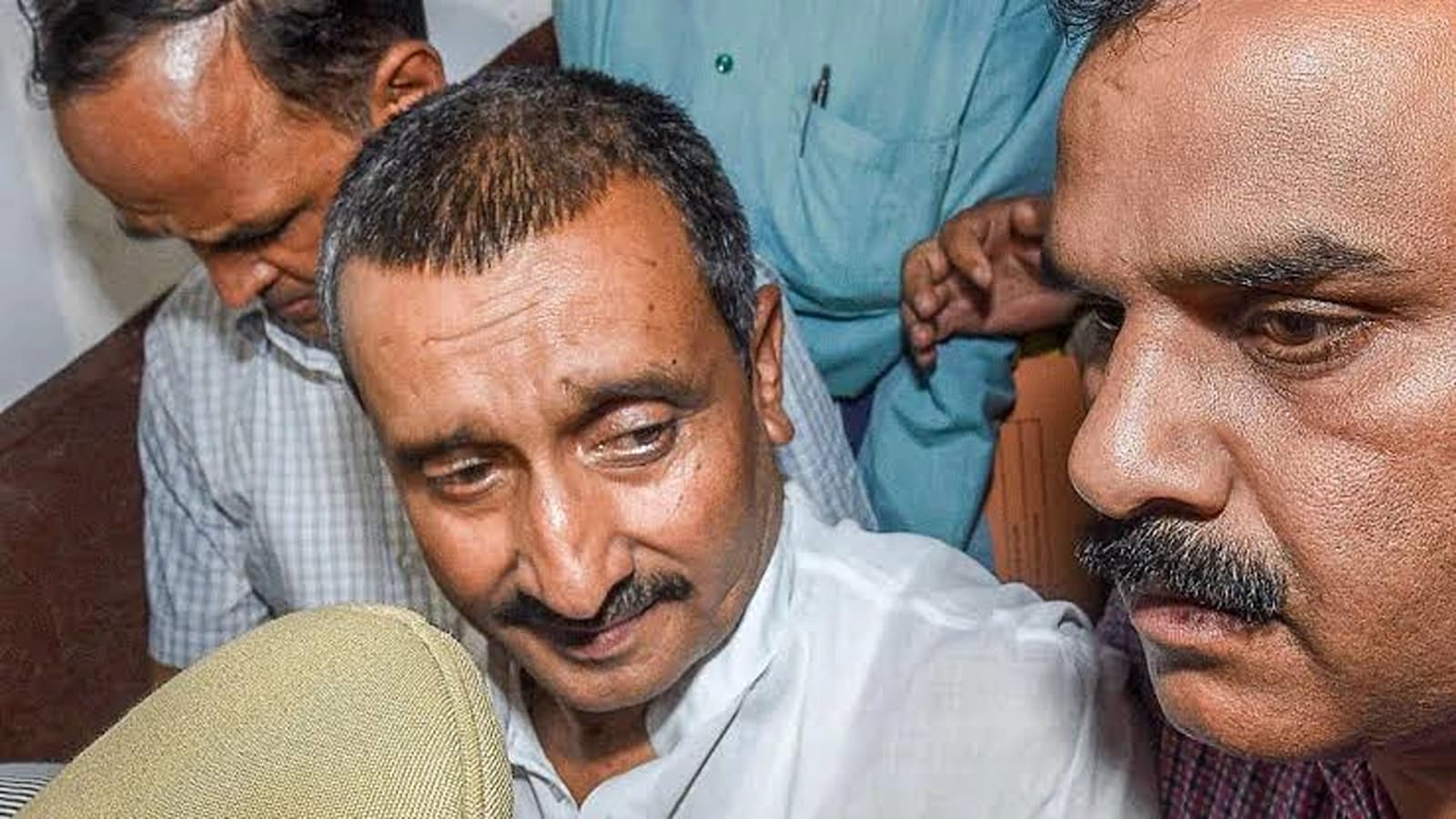
The Supreme Court of India on Dec 29, put an immediate halt to the Delhi High Court’s order granting bail to former Uttar Pradesh MLA Kuldeep Singh Sengar, who is serving a life sentence in the 2017 Unnao rape case involving a minor girl. The apex court’s order ensures that the controversial relief extended by the High Court will not take effect, and that Sengar will continue to remain in custody as his appeal against conviction awaits adjudication.
The stay was granted by a three-judge Bench headed by Chief Justice of India Justice Surya Kant, along with Justice J.K. Maheshwari and Justice Aravind Kumar, while hearing urgent petitions filed by the Central Bureau of Investigation (CBI) and other parties challenging the High Court’s decision to suspend Sengar’s sentence. The Bench observed that the matter raises serious questions of law and justice, particularly given the nature of the crime and the status of the convict.

Supreme Court’s Order: Immediate Stay and Notice Issued
Passing an interim order, the Supreme Court made it clear that the operation of the Delhi High Court judgment shall remain stayed until further orders. The court categorically directed that Kuldeep Singh Sengar shall not be released from jail pursuant to the impugned bail order, effectively neutralising the relief granted earlier.
The Bench noted that while appellate courts generally exercise caution in staying bail orders without hearing the beneficiary, this case warranted an exception due to “peculiar and compelling circumstances”. The judges took into account the fact that Sengar is already a convicted offender in multiple serious criminal cases, including one connected to the death of the rape survivor’s father.
The court also issued formal notice to Sengar, seeking his response to the petitions filed against the High Court ruling. He has been granted time to file a counter-affidavit, following which the matter will be taken up for detailed hearing.
Survivor’s Legal Rights Affirmed by the Apex Court
In a significant observation, the Supreme Court underscored that the survivor in the case holds an independent statutory right to challenge the bail order, and does not require special permission from the court to do so. The Bench clarified that the victim is free to approach the apex court in her own capacity if she chooses.
Importantly, the court also stated that free legal assistance would be made available to the survivor through the Supreme Court Legal Services Committee, should she seek it. However, the judges clarified that the survivor is equally entitled to pursue the case through a counsel of her choice.
This recognition of the survivor’s participatory rights reinforces evolving judicial thinking that places victims at the centre of criminal justice proceedings, especially in cases involving sexual violence against minors.
CBI’s Objection: ‘Narrow Interpretation Undermines POCSO’
Appearing for the CBI, Solicitor General of India Tushar Mehta strongly opposed the reasoning adopted by the Delhi High Court while granting bail. He argued that the High Court had misinterpreted the scope and intent of the Protection of Children from Sexual Offences (POCSO) Act, particularly with respect to aggravated offences.
The CBI contended that the High Court erred in concluding that an elected representative such as an MLA does not qualify as a “public servant” for the purposes of aggravated punishment under POCSO. According to the prosecution, such an interpretation dilutes the very purpose of the law, which seeks enhanced punishment where the offender holds authority, power, or influence over the victim.
The Solicitor General emphasised before the court that the offence involved a 15-year-old child, and that the law must be interpreted in a manner that protects minors rather than creating technical escape routes for powerful convicts.
Bench Questions Exclusion of MPs and MLAs
During the hearing, the Chief Justice raised pointed questions about the implications of excluding legislators from the definition of “public servant.” The Bench observed that accepting such an interpretation could lead to anomalous consequences, where lower-level government officials are treated as public servants, but lawmakers entrusted with public power are not.
The judges indicated that such a reading appears inconsistent with constitutional principles and legislative intent, signalling that the issue may require authoritative clarification by the Supreme Court.
What the Delhi High Court Had Ruled
The Supreme Court’s intervention came just days after the Delhi High Court suspended Sengar’s life sentence and granted him bail pending appeal. The High Court bench had reasoned that Sengar had already spent more than seven years in incarceration, and that his appeal against conviction was yet to be finally heard.
A key pillar of the High Court’s ruling was its view that aggravated offence provisions under POCSO and the Indian Penal Code were incorrectly applied, as Sengar, according to the bench, did not fall within the statutory definition of a “public servant” at the relevant time.
Based on this reasoning, the High Court concluded that the sentence could be suspended during the pendency of the appeal, subject to stringent bail conditions, including a high-value bond, restrictions on movement, and a prohibition on contacting the survivor or her family.
Why Sengar Did Not Walk Free Despite Bail
Despite the bail order, Sengar did not step out of prison, as he continues to serve a separate sentence in another criminal case linked to the Unnao incident. In 2020, he was convicted for culpable homicide in connection with the death of the survivor’s father, who died in custody after being arrested in a case widely criticised as retaliatory.
That conviction carries a ten-year sentence, ensuring that Sengar remains behind bars irrespective of bail in the rape case — a factor that the Supreme Court also took into account while staying the High Court order.
The Unnao Case: A Brief Background
The Unnao rape case dates back to 2017, when a minor girl accused then-sitting MLA Kuldeep Singh Sengar of abducting and raping her. The case triggered national outrage after allegations surfaced that the survivor and her family were subjected to intimidation, false cases, and sustained harassment.
Following widespread protests and media scrutiny, the investigation was transferred to the CBI, and the trial was shifted from Uttar Pradesh to Delhi to ensure fairness. In December 2019, a special CBI court convicted Sengar and sentenced him to life imprisonment for rape under IPC and POCSO provisions, along with imposing financial compensation for the survivor.
The case became emblematic of concerns surrounding political power, abuse of authority, and access to justice for victims of sexual violence.
Public Reaction and Legal Debate
The Delhi High Court’s decision to grant bail had sparked sharp criticism from civil society groups, women’s rights activists, and sections of the legal community. Many argued that suspending a life sentence in a case of child rape sends a troubling signal and undermines public confidence in the justice system.
The Supreme Court’s swift response has been widely viewed as an attempt to restore balance and ensure that the legal questions involved are examined with due seriousness, without allowing premature relief to take effect.
What Lies Ahead
With the Supreme Court’s stay now in force:
- Kuldeep Singh Sengar will remain in judicial custody
- The Delhi High Court’s bail order will not be implemented
- The apex court will conduct a detailed examination of legal issues, including interpretation of “public servant” under POCSO
The survivor retains full legal rights to independently challenge the relief granted earlier
The final outcome of the case is expected to have far-reaching implications for criminal jurisprudence, particularly in cases involving sexual offences by individuals holding political or social power.





%20Preeti%20Lobana%2C%20Sh.%20Jayant%20Chaudhary%2C%20Chris%20Phillips.jpeg&w=256&q=75)