Budget 2026–27: Education allocation raised to ₹1.39 lakh crore, focus on skilling and healthcare training
The budget increases education spending by 8.27%, expanding support for schools, higher education, healthcare training, skilling programs, and employment-focused initiatives across sectors, with emphasis on workforce readiness.
EPN Desk02 February 2026 07:54
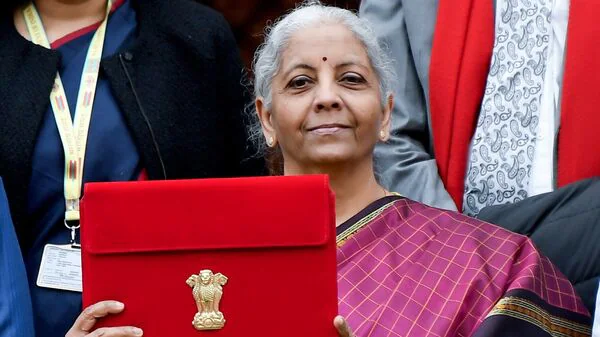
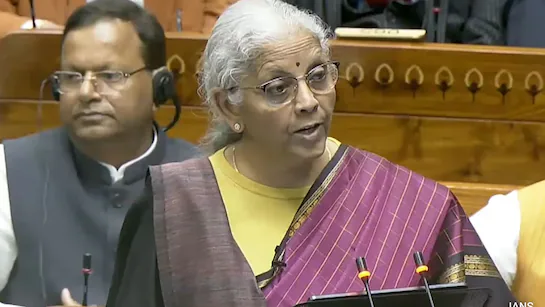
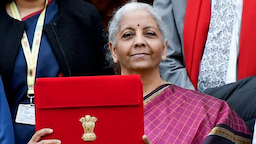
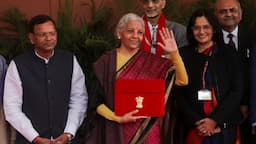
The Union Budget for 2026–27, presented by Finance Minister Nirmala Sitharaman on Feb 1, placed strong emphasis on education, skilling, healthcare training, and employment linkages, with the education ministry receiving an allocation of ₹1.39 lakh crore.
This marks an 8.27% increase over the previous financial year and represents about 2.6% of the total estimated expenditure of ₹53.5 lakh crore for 2026–27.
Out of the total education outlay, ₹83,562.26 crore has been earmarked for school education, while ₹55,727 crore has been allocated to higher education, registering growth of 6.35% and 11.28%, respectively.
Union Education Minister Dharmendra Pradhan welcomed the enhanced allocation, saying it reflects the government’s vision for a developed India.
“Last year’s budget allocation was ₹1 lakh 28 thousand 650 crore, which has now been increased to ₹1 lakh 39 thousand 299 crore,” he said.
A major thrust of the budget is on healthcare education, pharmaceuticals, and allied health professions. At the center of this push is a ₹10,000 crore sectoral outlay for the biopharmaceutical ecosystem, aimed at strengthening pharmaceutical education, clinical training, and research.
The government has proposed setting up three new National Institutes of Pharmaceutical Education and Research, taking the total number to 10, while seven existing NIPERs will be upgraded to enhance advanced training, research capacity, and industry linkages.
In addition, a nationwide network of more than 1,000 accredited clinical trial facilities has been proposed to address long-standing gaps in hands-on clinical exposure and translational research.
Allied Health Professional education will be expanded across 10 disciplines, including optometry, anesthesia technology, applied psychology, and behavioral health.
The government plans to train one lakh allied health professionals over the next five years to address shortages in hospitals and community health systems.
Complementing this is a proposal to build a stronger geriatric and long-term care ecosystem by training 1.5 lakh multi-skilled caregivers, including wellness and yoga practitioners.
Traditional medicine and mental healthcare education have also received focused attention. The budget proposes setting up three new All India Institutes of Ayurveda to expand capacity in education, research, and healthcare delivery.
In mental healthcare, a second national institute on the lines of NIMHANS will be established in North India, while the existing mental health institute in Ranchi will be upgraded.
To address shortages in veterinary professionals, the budget proposes a loan-linked capital subsidy to support the establishment of veterinary and para-veterinary colleges, hospitals, diagnostic laboratories, and breeding facilities in the private sector.
The initiative aims to add more than 20,000 professionals to the veterinary and animal healthcare workforce.
Beyond healthcare, the budget places strong emphasis on skilling and employment generation, particularly for smaller cities.
Professional bodies such as ICAI, ICSI, and ICMAI will be tasked with designing short-term modular courses and practical toolkits to train a new cadre of “corporate mitras.”
These programs are intended to support small businesses in tier 2 and tier 3 cities by creating locally available professional expertise in accounting, compliance, and corporate governance.
Research and employment linkages also featured prominently in the budget speech. Sitharaman referred to the Anusandhan Research Fund and said nearly 25 crore people have moved out of poverty through various government interventions.
To sustain momentum, a high-powered education-to-employment and enterprise standing committee will be constituted, with the services sector identified as a key driver of the next phase of growth.
The committee will focus on employment generation, exports of services and technologies, and integration of AI-linked skills with job requirements.
Several flagship education schemes continue to receive substantial support, including ₹42,100 crore for Samagra Shiksha, ₹12,750 crore for PM POSHAN, and ₹7,500 crore for PM SHRI Schools.
Equity-focused measures include a proposal to set up at least one girls’ hostel in every district, particularly targeting regions with low female participation in STEM education. Enhanced funding has also been proposed to support girls’ education, safety, and overall well-being.
Higher education infrastructure will be expanded through a challenge-based model, under which the Centre will support states in developing five university townships near industrial and logistics hubs.
These townships are envisioned as integrated clusters housing multiple universities and colleges, residential facilities, and shared research infrastructure.
The creative and design sectors have been brought under the skilling and education push.
The budget proposes upgrading the Indian Institute of Creative Technology in Mumbai and establishing content creation labs focused on animation, visual effects, gaming, and comics across 15,000 schools and 500 colleges.
A new National Institute of Design is proposed in eastern India to address the growing demand for trained designers and expand access beyond metropolitan regions.
Tourism, hospitality, and sports education have also been integrated into the broader skilling narrative. A National Institute of Hospitality will be set up, with the National Council for Hotel Management upgraded to better align academic training with industry needs.
As part of a pilot initiative, 10,000 tourist guides across 20 iconic sites will undergo 12-week training programs developed in collaboration with IIMs.
In sports, the Khelo India Mission will be extended with a 10-year integrated talent development pathway covering beginner, intermediate, and elite levels.
Science outreach and research infrastructure will be strengthened through renewed focus on astronomy and astrophysics.
The budget announces four major telescope facilities, including a large solar telescope, the Himalayan Chandra Telescope, and the COSMOS-2 planetarium, aimed at boosting research, training, and public engagement in space sciences.
The budget also links education with agriculture and rural livelihoods. Under an ICAR-led initiative, AI-based decision support systems will be deployed to improve farm productivity, incorporating technology-enabled training and advisory services for farmers.
Relief for students and families was announced through a reduction in the Tax Collected at Source rate on overseas education and medical remittances under the Liberalized Remittance Scheme, with TCS lowered from 5% to 2%.
Presenting her ninth consecutive budget, Sitharaman said the proposals were shaped by “Yuva Shakti” under the Viksit Bharat initiative and guided by three core Kartavyas focused on inclusive development, education, and employment.
Emphasizing equitable growth, she said the dividends of economic expansion are reaching all sections of society, including farmers, Scheduled Castes, Scheduled Tribes, women, and youth, while reaffirming the government’s commitment to the poor, underprivileged, and disadvantaged.