With India's ongoing General Elections 2024 captivating the nation's attention, a retrospective glance at the trajectory of electoral reforms in the country underscores the continuous evolution and enhancement of its democratic system. From the founding of the Election Commission to the introduction of Electronic Voting Machines (EVMs), India's electoral reforms reflect a commitment to ensuring fair and transparent elections, vital for upholding the principles of democracy.
Foundation of Election Commission and First General Election
The inception of the Election Commission of India on January 25, 1950, marked a pivotal moment in India's democratic journey. Led by Sukumar Sen, the Commission oversaw the inaugural General Election held from October 1951 to February 1952, a monumental event characterized by the participation of 17.5 crore voters amidst logistical challenges.

Lowering of Voting Age
The passage of the 61st Constitutional Amendment Act in 1984, reducing the voting age from 21 to 18 years for both Lok Sabha and assembly elections, exemplified a progressive move to empower the youth and enhance their participation in the political process.
Deputation to Election Commission
In 1985, a significant provision was introduced, deputing officers and staff engaged in electoral roll preparations to the Election Commission, ensuring their impartiality and dedication to electoral duties.
Transition to Ballot Papers from Coloured Ballot Boxes
India's transition from coloured ballot boxes to paper ballots marked a crucial step in streamlining the voting process, despite inherent challenges in manual counting.
Introduction of Electronic Voting Machines (EVMs)
The adoption of EVMs in 1989 revolutionized India's electoral landscape, enhancing efficiency and accuracy in voting. Indigenously designed and manufactured, EVMs became a cornerstone of India's electoral infrastructure, ensuring the integrity of the electoral process.
Provision Against Booth Capturing
The inclusion of provisions against booth capturing in 1989 underscored the commitment to safeguarding the sanctity of elections and preventing electoral malpractices.
Model Code of Conduct (MCC)
T.N. Seshan's tenure as Chief Election Commissioner was marked by his vigorous enforcement of the Model Code of Conduct, aimed at promoting fair play and ethical conduct during elections.
Allocation of Time on Electronic Media
A 2003 provision mandated equitable allocation of time on electronic media during elections, fostering a level playing field for political parties to disseminate information.
Restrictions on Exit Polls
In 2009, restrictions were imposed on conducting and publishing exit polls during elections, mitigating undue influence on voter behavior.
Online Enrolment in the Electoral Roll
The introduction of online enrolment in the electoral roll in 2013 exemplified efforts to enhance accessibility and convenience for voters.
Introduction of None of the Above (NOTA) Option
The Supreme Court's directive to include the NOTA option in ballot papers and EVMs in 2013 provided voters with the choice to abstain from voting discreetly.
Voter-Verifiable Paper Audit Trail (VVPAT) System
The introduction of VVPAT system alongside EVMs in 2013 further bolstered transparency and accountability in the electoral process.
Appointment of Election Commissioners
Recent reforms in the appointment process of election commissioners, stipulating the involvement of a Selection Committee comprising key stakeholders, aimed to enhance the autonomy and credibility of the Election Commission.
Key Committees Related to Electoral Reforms
Several committees, including the Dinesh Goswami Committee, Vohra Committee, and Indrajit Gupta Committee, have played instrumental roles in shaping electoral reforms in India, addressing issues ranging from state funding of elections to the nexus between crime and politics.
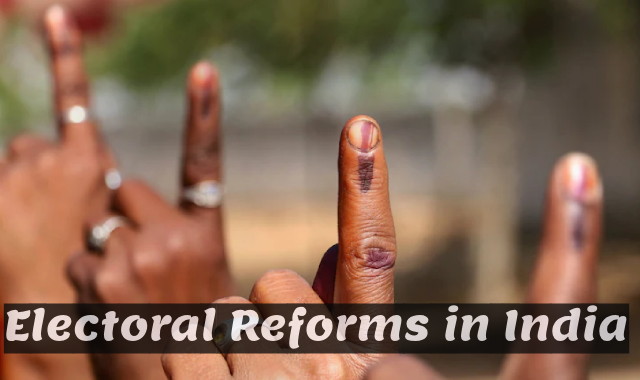
The indelible ink, symbolic of India's electoral integrity, and the indigenous production of EVMs and VVPATs further underscore India's commitment to conducting free, fair, and transparent elections.
As India navigates the complexities of its electoral process, these reforms stand as pillars of democratic progress, reinforcing the nation's commitment to upholding the principles of democracy and ensuring the voice of every citizen is heard.