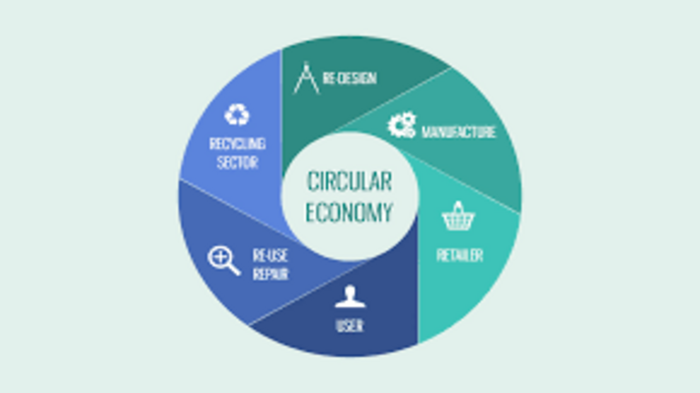
The Union Cabinet has approved the National Mission on Circular Economy, marking a major policy push towards sustainable resource management and environmentally responsible growth. The mission aims to transition India from the traditional linear model of “take–make–dispose” to a circular economy framework that emphasises waste reduction, reuse, recycling, and resource efficiency.
The mission will initially focus on high-impact sectors such as plastics, electronics (e-waste), construction and demolition waste, batteries, and metals. These sectors generate large volumes of waste and have significant potential for material recovery and value addition. By promoting circular design, extended product life cycles, and systematic recycling, the mission seeks to reduce environmental degradation and pressure on natural resources.

A key component of the mission is strengthening policy and regulatory frameworks, including Extended Producer Responsibility (EPR). Producers will be encouraged to take greater responsibility for the end-of-life management of products, thereby incentivising eco-friendly design and sustainable manufacturing practices. The mission also promotes standardisation, quality norms for recycled materials, and development of secondary raw material markets.
The mission places strong emphasis on innovation, technology, and entrepreneurship. Support will be provided for research and development, start-ups, and MSMEs engaged in recycling, waste processing, and material recovery. Integration of digital technologies for waste tracking and resource mapping is expected to improve efficiency and transparency.
From an economic perspective, the circular economy approach can generate employment, reduce import dependence on critical raw materials, and improve industrial competitiveness. It also complements national initiatives such as Swachh Bharat Mission, Make in India, and India’s climate and Net Zero commitments.
Significance
The National Mission on Circular Economy promotes sustainable consumption and production while reducing waste and import dependence. By aligning environmental protection with economic growth, it supports climate action and fosters a resilient, resource-efficient, and sustainable economy.