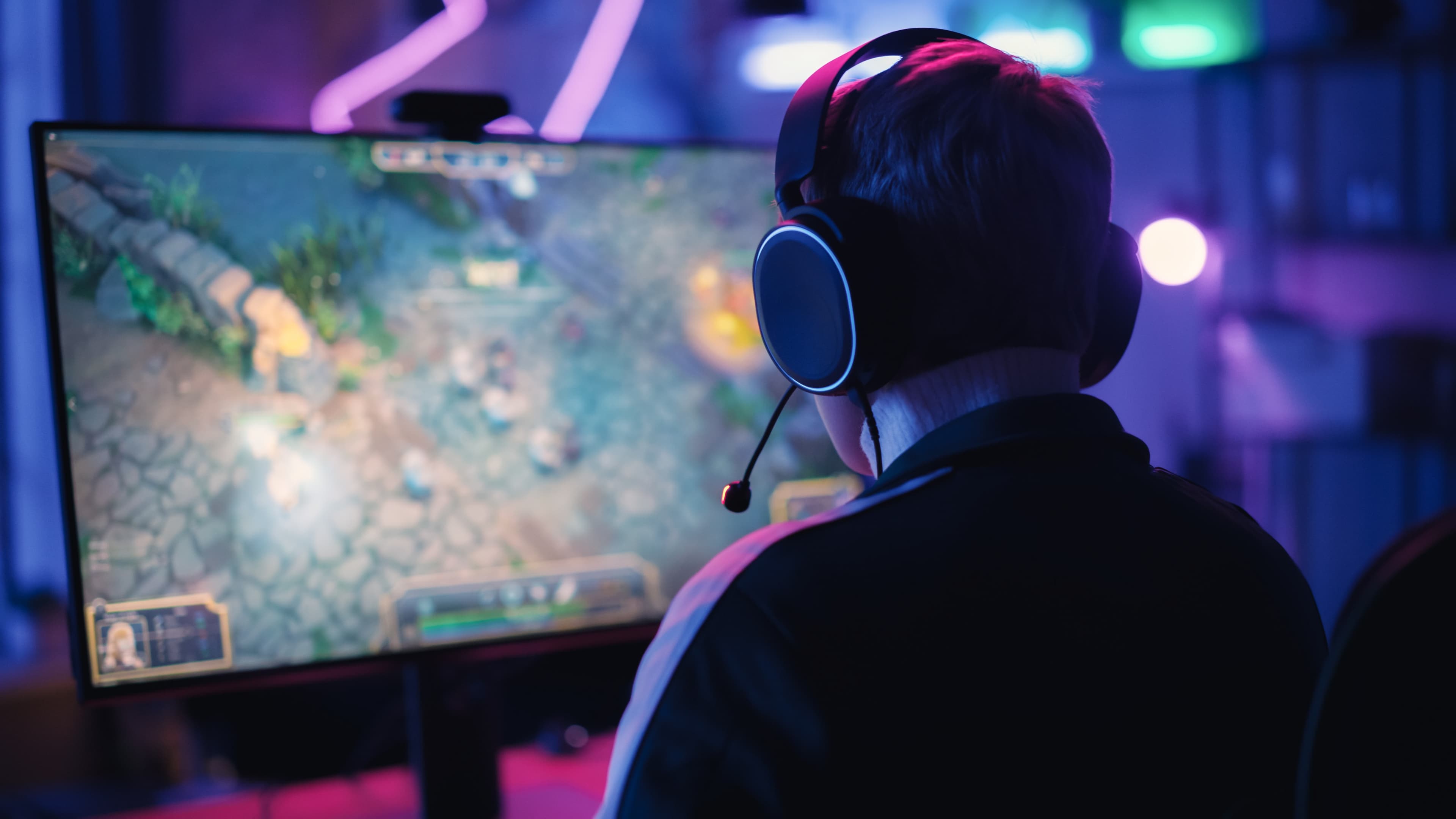
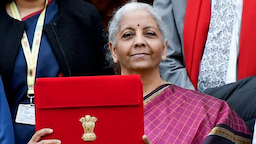
Finance Minister Nirmala Sitharaman highlighted a major initiative to boost India’s animation, gaming, and digital content industries by setting up content creator laboratories in thousands of schools and colleges.
The move was announced as part of the Union Budget 2026–27, emphasizing the government’s commitment to preparing students for future-ready careers and expanding creative industries.

Under the plan, AVGC (Animation, Visual Effects, Gaming, and Comics) content creator labs will be established in 15,000 secondary schools and 500 colleges nationwide.
The initiative will be implemented under the Indian Institute of Creative Technologies (IICT), Mumbai, which operates as a flagship institution of the Ministry of Information and Broadcasting.
Speaking in Parliament, Sitharaman stressed the rapid expansion of India’s AVGC sector and its employment potential.
She noted that the industry is expected to require nearly two million skilled professionals by 2030, making investment in targeted skilling and infrastructure crucial to meet future workforce needs.
Commenting on the Budget, Dr Madhavan Nair Rajeevan, Vice Chancellor, Atria University, said, "The Union Budget 2026 signals a shift from incremental improvements to building a future-ready education ecosystem. By combining access measures such as girls’ hostels and content labs with world-class institutions in healthcare and vocational training, the government is connecting education more closely with industry, innovation and global standards.”
“Initiatives like university townships and skill-focused programs demonstrate a long-term vision to nurture talent that is not just employable but capable of driving leadership, research, and entrepreneurship across sectors,” Rajeevan added.
The Ministry of Information and Broadcasting has been allocated a total budget of ₹4,551.94 crore, with a substantial portion directed to Prasar Bharati, India’s public service broadcaster.
Funding also includes talent development programs in animation, visual effects, and gaming, alongside measures to strengthen the community radio sector.
As part of the government’s strategy to position India as a global hub for content creation, ₹250 crore has been earmarked specifically for talent development in the AVGC sector.
The goal is to nurture creative skills among young people and showcase India’s capabilities in digital entertainment and interactive media internationally.
“The Union Budget 2026 to 27 makes a clear statement that India’s next growth phase depends on how quickly we can connect education to employment and enterprise. The proposed high-powered Education to Employment and Enterprise Standing Committee signals a stronger outcome lens, especially for the services sector and AI-shaped jobs,” said Naveen Mahesh, Co-founder, Beyond 8.
“The Budget also backs new-age pathways through AVGC content creator labs in 15,000 secondary schools and 500 colleges, a new National Institute of Design in the eastern region, and university townships near major industrial and logistics corridors,” added Mahesh.
The announcement has received positive responses from industry stakeholders. The Game Developer Association of India (GDAI) described the move as a significant endorsement of long-standing recommendations to develop a skilled, next-generation workforce for interactive media.
Manish Agarwal, Board Member of GDAI, said the creation of AVGC content creator labs in schools and colleges is a landmark step toward building India’s future game designers and developers.
He added that the initiative is expected to accelerate careers in gaming, AVGC-XR, and interactive media nationwide.
With this budgetary push, the government has signaled its intent to integrate creative technologies into mainstream education while preparing India’s youth for emerging opportunities in the global digital economy.