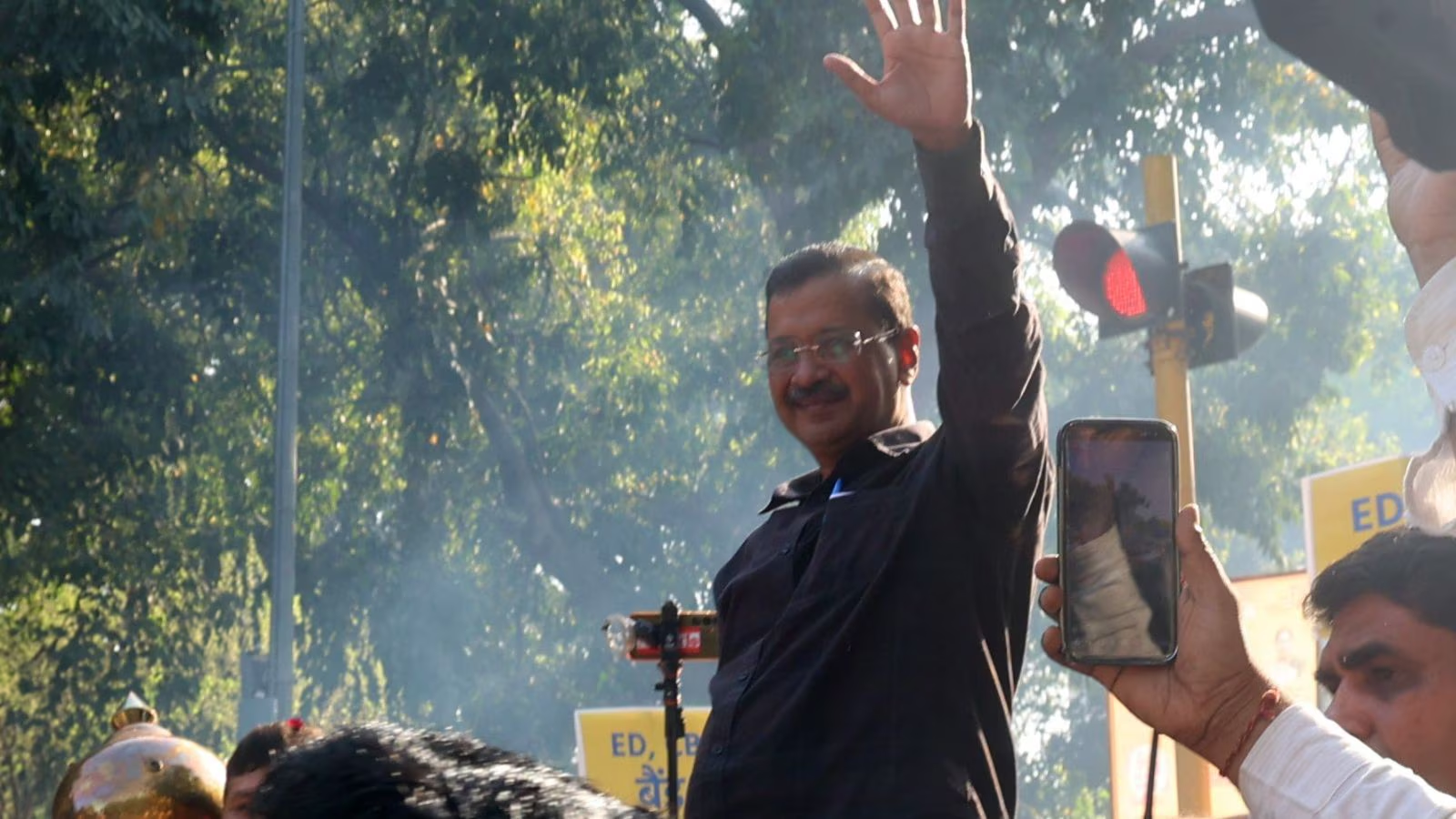
In a significant setback to the prosecution, a Delhi trial court recently discharged former Delhi chief minister Arvind Kejriwal and 22 others in the alleged excise policy corruption case, ruling that lawful commercial gains secured within a policy framework cannot be treated as criminal unless backed by clear evidence of fraud, bribery, or statutory violation.
The court categorically held that the actions of companies named as accused or “beneficiaries” were either legitimate business transactions or expressly permitted under the regulatory regime.

At the heart of the Central Bureau of Investigation’s case were two key allegations: that M/S Indospirits was structured to represent the so-called “South Group” and used as a vehicle to recoup alleged “upfront money.”
According to the agency, this was achieved by increasing the wholesale margin from 5% to 12% and by raising the annual turnover eligibility for an L-1 license to ₹500 crore for five consecutive years — moves it claimed were designed to eliminate competition and favor the group.
The CBI further alleged that 61% of the company’s profits were illegally transferred to Hyderabad-based businessman Arun Ramchandra Pillai as proceeds of crime, and that the funds were used to finance election campaigns in Goa and Punjab in 2022.
The court, however, found the prosecution’s theory internally inconsistent.
If the eligibility threshold was deliberately raised to benefit conspirators, the judge noted, the fact that the very company alleged to be a beneficiary struggled to meet the enhanced turnover requirement seriously undermined that claim. A clause that renders the supposed beneficiaries themselves ineligible, the court observed, cannot on its face be described as a provision crafted exclusively for their advantage.
On the question of wholesale margins, the court rejected the suggestion of manipulation. It clarified that the policy shift was not from a fixed 5% to 12%, but from a 5% minimum to a standardized 12%. The first draft prescribed only a floor, not a ceiling, while the revised draft replaced flexibility with uniformity. Crucially, the investigating agency had not alleged any wrongdoing in the initial draft.
The court also found that the L-1 license was granted strictly in accordance with eligibility norms and that the transfer of profits to the accused businessman stemmed from a prior consensual understanding among partners, not from a clandestine diversion of funds.
With its ruling, the court drew a sharp line between commercial strategy and criminal conspiracy — underscoring that suspicion, however strong, cannot substitute for demonstrable illegality.