The deep-frying oil hissed as Promod Kumar flipped samosas at his roadside stall in Noida’s Sector 16. But behind the routine of breakfast service was a growing worry: would he even be able to open the stall the next day?
The LPG cylinder he usually procured through the black market had already jumped from ₹1,000 to ₹1,500, forcing him to raise samosa prices by nearly 50%. When he tried ordering another cylinder for the next day, his supplier sounded unsure.

“I’ve spoken to someone who might bring one from Ghaziabad. If it doesn’t arrive, the shop won’t open,” Promod said, pointing to the nearby Atta Market in Sector 18. “Several dhabas and food joints there have already started shutting down.”
By the next morning, he managed to reopen — but at an even steeper cost.
“Got a cylinder for ₹2,300,” he said.
Promod is far from alone. His neighbor Shivpal Kumar, who runs a tea stall, has raised the price of a cup of tea from ₹10 to ₹15, while another vendor nearby is charging ₹20.
Across several cities, food vendors, dhabas and small eateries are either cutting menus or shutting shop altogether as LPG cylinders become scarce and expensive.
gig workers feel the hit
The fallout is rippling through India’s gig economy. With restaurants closing or reducing operations, delivery orders have plunged sharply.
According to a labor union representing platform workers, the LPG crisis has already cut delivery gigs by 50–60% in major cities, leaving thousands of workers struggling for income.
In a letter to Labour Minister Mansukh Mandaviya, the Gig and Platform Service Workers Union warned that the shortage has become “a war-fuelled disaster destroying livelihoods”.
India had around 1.2–1.5 crore platform and freelance workers in 2025–26, many of whom depend on daily delivery orders for income.
“Feels like the Covid lockdown again”
Despite government assurances that LPG supplies remain stable, people on the ground describe a very different reality.
At a dhaba in Noida’s Sector 22 on March 11 night, a customer waiting for dinner compared the situation to the early days of the pandemic.
“It feels like the Covid lockdown again,” he said. “Back then at least we were getting food. Corona, lockdown, demonetization — it feels like we are the ones who keep facing all this.”
The current squeeze is widely linked to disruptions triggered by the ongoing conflict involving Iran, Israel, and the United States, which has rattled global energy markets.
While domestic consumers are still receiving cylinders within five to seven days in many places — after the government prioritized household supply — the shortage of commercial LPG cylinders is far more acute.
Restaurant associations across several states say stocks are running dangerously low.
Meanwhile, queues outside LPG godowns and agencies are growing longer, and black-market prices in some areas have reportedly climbed to ₹3,000 per cylinder.
government steps in
The government has attempted to calm fears, insisting that there is no shortage of LPG for households.
Petroleum Minister Hardeep Singh Puri said India is sourcing LPG through multiple routes and suppliers to maintain stable supplies.
To boost production and prevent hoarding, the Petroleum Ministry invoked provisions under the Essential Commodities framework to divert hydrocarbon streams for LPG manufacturing.
Authorities have also tightened booking rules to curb panic buying:
- Refill booking wait time raised from 21 to 25 days
- 30 days wait mandated for households with double connections
Prices have also risen. On March 7, the cost of a 14.2-kg domestic LPG cylinder increased by ₹60, while 19-kg commercial cylinders became costlier by ₹115.
However, the tighter booking rules appear to have fuelled anxiety instead of calming it.
Queues grow, confusion spreads
In cities such as Delhi, Bengaluru and Mumbai, long queues outside LPG agencies have become common. Similar stress has been reported from parts of Uttar Pradesh, Bihar and Jharkhand.
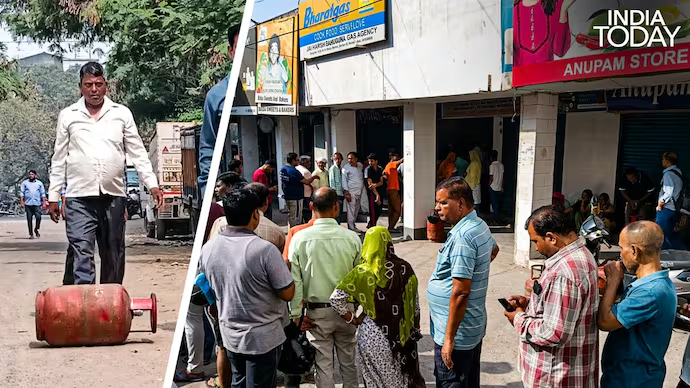
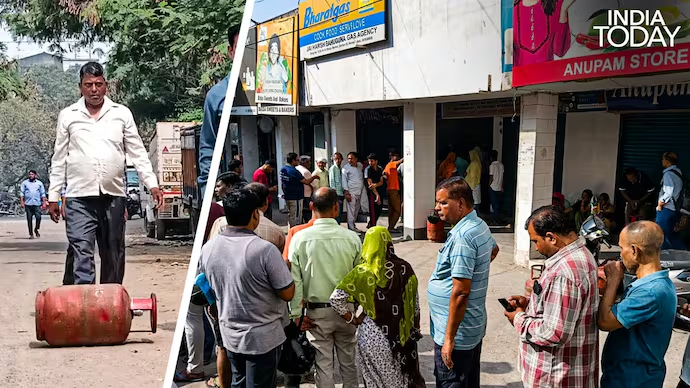
In Noida’s Sector 22, dozens of residents lined up with empty cylinders outside a gas agency this week. By Wednesday morning, the queue had grown to nearly 50 people.
Booking glitches and delivery delays have further deepened frustration.
A central government employee waiting at an LPG agency in Sector 56 said he had already spent two days trying to secure a refill.
“Do I keep doing this or go to office?” he asked after standing in line for hours without confirmation of his booking. Eventually, he turned to the black market, where a delivery agent promised a cylinder for ₹1,800.
Eateries scramble for alternatives
Many dhabas and food carts rely on household LPG cylinders — the red 14.2-kg domestic ones — often sourced informally from the black market. As supplies tighten, demand from these businesses has worsened the crunch.
One Bharat Gas delivery agent in Noida said their godown earlier received five trucks of cylinders daily, but supplies have now dropped to just one truck.
Restaurant owners are scrambling for alternatives.
A dhaba operator in Sector 22 said he has stopped making rotis and tawa parathas to conserve gas.
“Only the wood-fired tandoor is running now,” he said after buying a cylinder for ₹2,300.
But even that may not last.
“If a cylinder comes after booking, it may take seven days,” he said. “The bigger question is — should I use it for the restaurant or for home?”
Wood stoves return
In parts of northern India, some households have already started reverting to older cooking methods.
A woman from Basti in Uttar Pradesh said her family had been cooking on firewood for a week because they could not secure an LPG refill.
In Ayodhya, kitchens like Ram Rasoi at Amawa Temple are considering switching to electric stoves, coal or firewood if LPG supplies tighten further.
For now, the government insists supply remains under control. But rising prices, booking restrictions and black-market activity have created a wave of panic.
Across cities, wood-fired stoves are making a quiet comeback, induction cooktops are flying off shelves, and eateries are beginning to shut down.
For millions standing in queues with empty cylinders, one question looms large — how long will the squeeze last, and how much worse could it get?