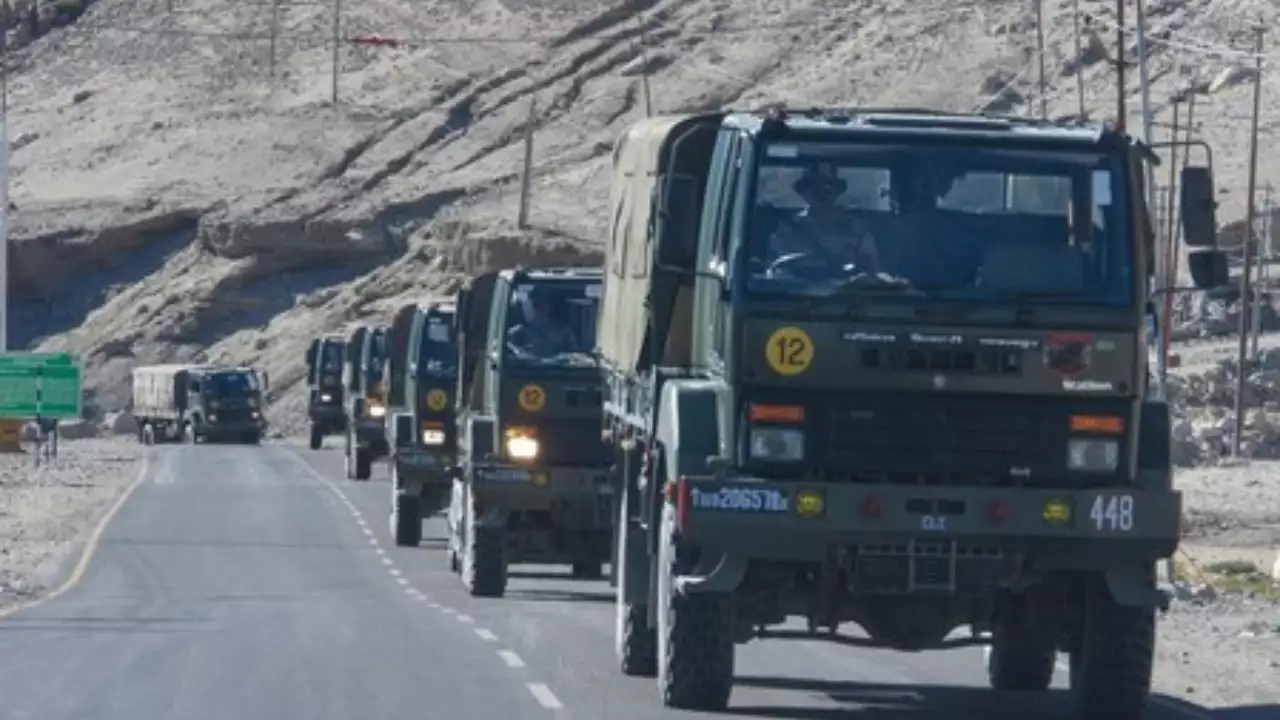
Despite the recent patrolling agreement between Demchok and Depsang, India will not reduce its army deployment in eastern Ladakh this winter, according to South Block officials.
The "eyeball-to-eyeball" deployment of Indian and Chinese soldiers in eastern Ladakh has led to the stationing of over 50,000 security personnel, they said.

Defense sources indicated that the deployment will remain unchanged until a more comprehensive de-escalation is achieved. The recent disengagement is seen as an effort to foster trust.
The Indian security forces implemented "mirror deployment" after China strengthened its infrastructure and advanced a sizable detachment of forces along the Line of Actual Control (LAC) following the 2020 hostilities, sources said.
After the troop pullback following the October 21 agreement, India and China began patrolling in Demchok and Depsang.
The agreement stipulates that in order to prevent direct confrontations, the two sides will maintain communication regarding patrolling activities.
In addition to ground patrols, the two sides will use drones and other technical surveillance tools to monitor the disputed territory.
A meeting of the two countries' Working Mechanism for Consultation and Coordination (WMCC) is also scheduled. China has already dismantled military installations in the Depsang region that had been used to block Indian entry.
At least two additional Chinese posts that were established on the plateau have been removed, and buildings at the 'Y Junction', a crucial access point, have been dismantled.
China claims 90,000 square kilometers in Arunachal Pradesh and illegally occupies 38,000 square kilometers in Ladakh.
Through several procedures outlined in the peace agreements of 1993 and 1996, both sides have successfully managed the undemarcated LAC, despite it being a constant source of tension.
However, according to officials, China violated the agreement by amassing large troop concentrations, leading to conflicts and the deaths of soldiers on both sides.