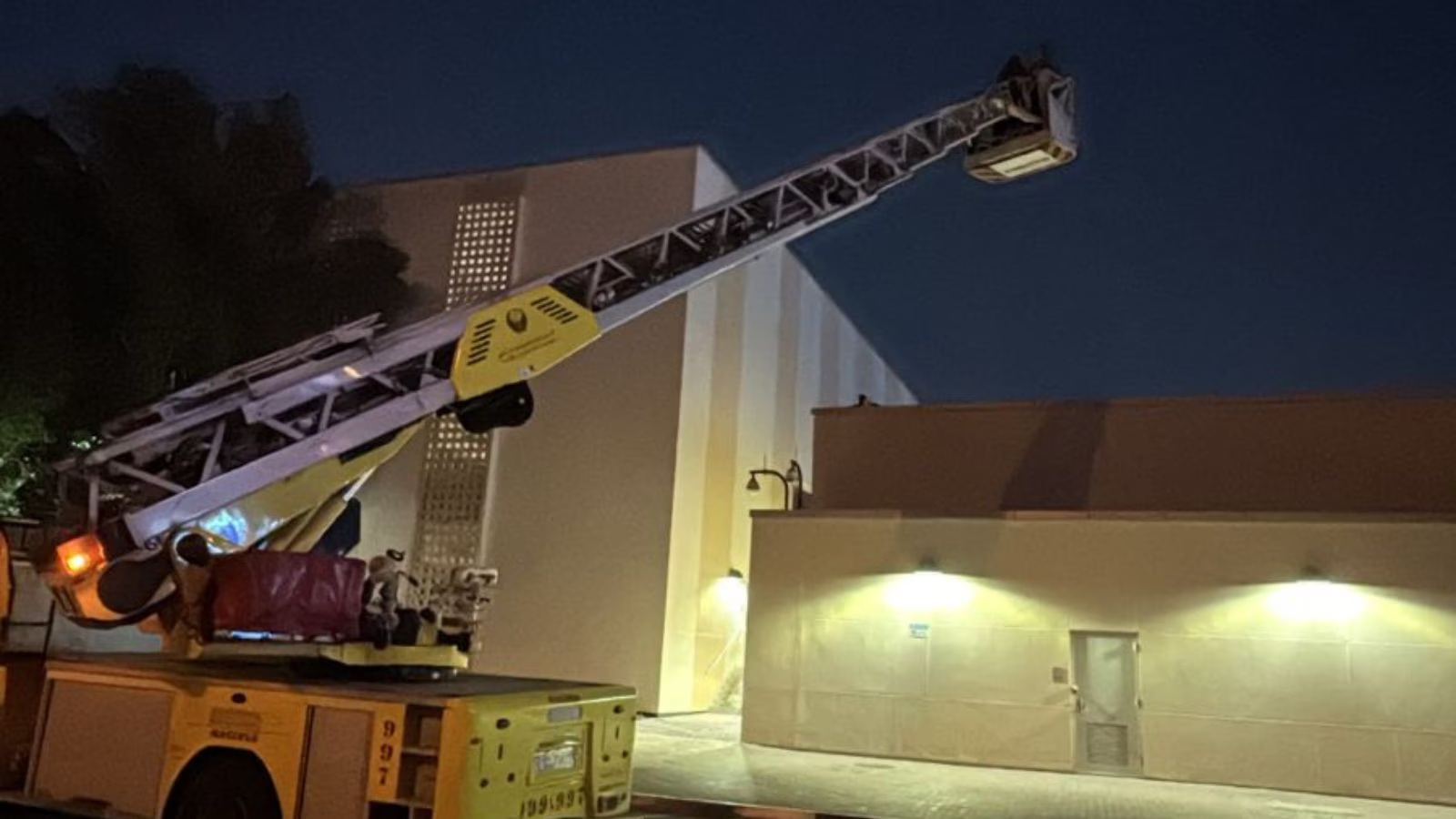
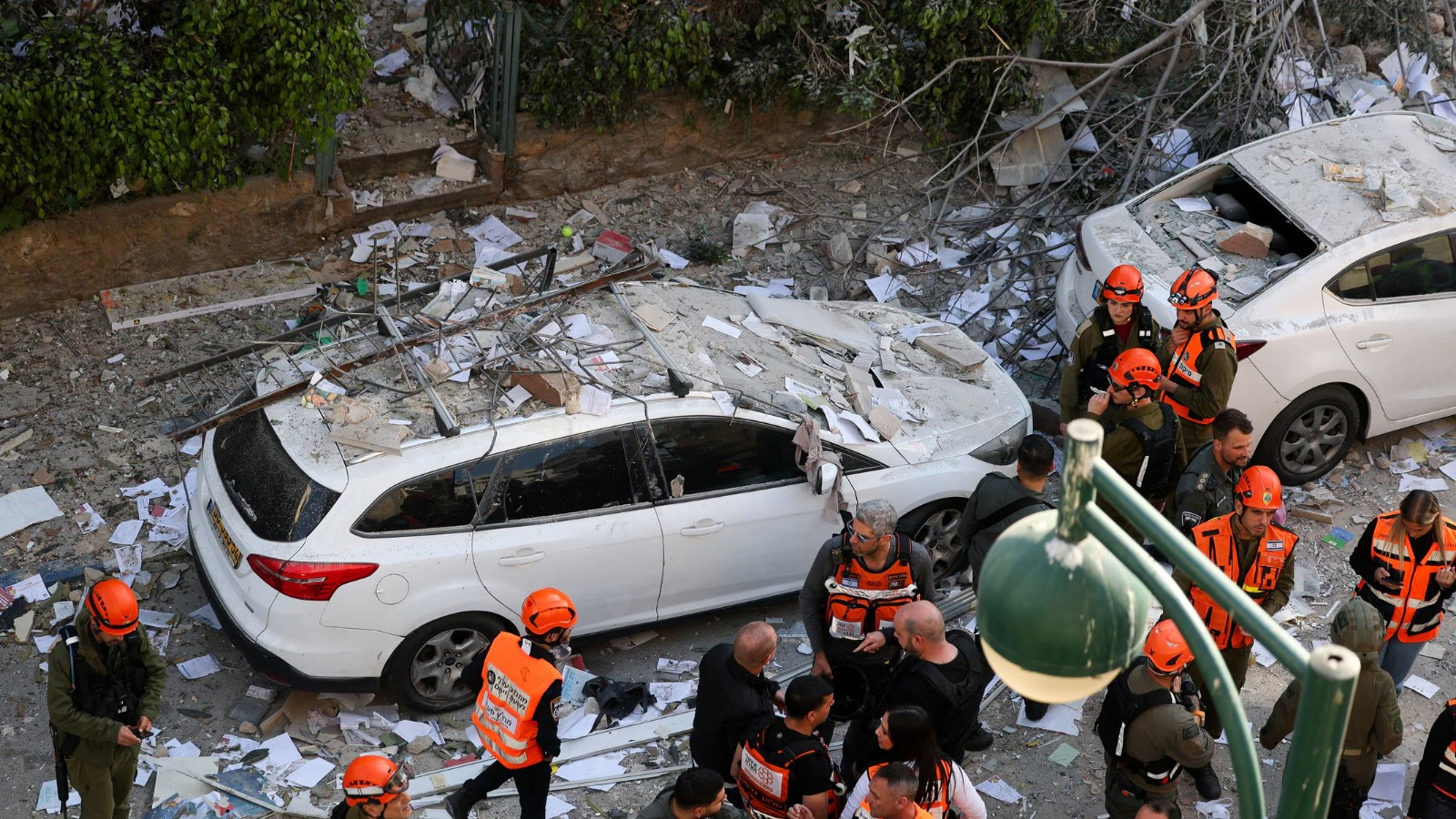
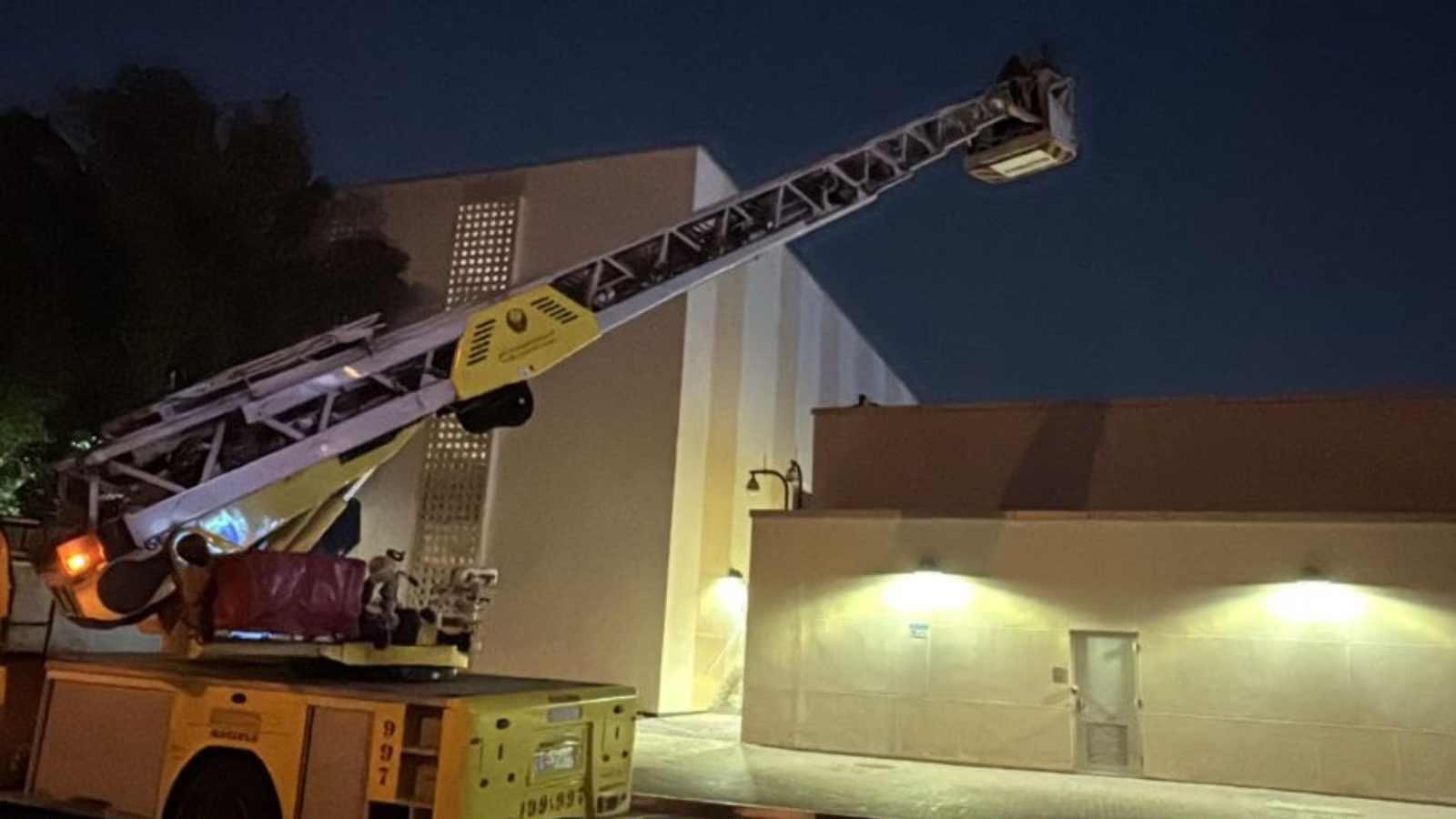
A drone strike near the US consulate in Dubai late March 3 triggered a fire, marking a sharp escalation in Iran’s retaliatory campaign targeting American diplomatic missions across West Asia. Authorities confirmed that the blaze was swiftly contained and no injuries were reported, according to the Dubai Media Office.
The strike follows reported attacks earlier this week on the US embassies in Kuwait and Riyadh, underscoring the widening arc of tensions involving the United States, Israel, and Iran.

UAE issues public safety alert
In the aftermath of the incident, UAE authorities urged residents to exercise caution.
“Do not approach, touch, or photograph any debris or objects that have fallen as a result of successful air interceptions,” the alert stated, warning that even seemingly harmless objects could pose safety risks. Authorities have asked the public to allow relevant agencies to assess and secure impacted areas.
Aviation disruption deepens
The security flare-up has severely disrupted aviation across the Gulf.
- Emirates suspended all Dubai operations until 11:59 PM (UAE time) on March 4.
- Etihad Airways halted Abu Dhabi services through March 5.
Both carriers advised passengers not to travel to airports unless directly contacted.
Indian carriers have begun cautiously resuming operations to and from select West Asian airports, primarily operating special flights to evacuate stranded passengers. A staggered restoration of scheduled services is underway, particularly to Oman and Saudi Arabia, where airspace remains largely open to civilian traffic.
US issues “depart now” advisory
US Secretary of State Marco Rubio has issued an emergency advisory urging Americans in 13 countries — including the UAE, Bahrain, and Egypt — to “Depart Now,” citing serious safety risks amid escalating hostilities.
Meanwhile, US President Donald Trump reiterated Washington’s objective to neutralise Tehran’s nuclear capabilities, signalling that diplomatic warnings had gone unheeded.
Trade shockwaves reach India
The geopolitical crisis is also rippling into India’s trade corridors.
At Jawaharlal Nehru Port Authority (JNPA), more than 5,000 export containers are currently stranded, including nearly 1,000 refrigerated (reefer) units carrying perishable agricultural produce.
Port authorities confirmed that all reefer containers remain plugged in to preserve cargo integrity. To mitigate losses, JNPA is offering stacking facilities and extended storage within port premises to prevent unnecessary cargo movement and additional costs.
Why this gulf crisis hits India harder
The present upheaval is being viewed as more destabilizing for India than past Gulf crises, including those of the 1990s, largely due to the vastly expanded Indian diaspora footprint and deepened economic integration.
Two decades ago, the Indian community in the United Arab Emirates functioned as a quiet yet omnipresent workforce — visible in eateries, retail stores, ports, and community spaces, yet largely under the radar. Today, that presence has grown exponentially, with Indians deeply embedded across sectors ranging from construction and retail to finance and healthcare.
Any prolonged instability now directly threatens remittances, aviation connectivity, energy supplies, and trade flows — pillars critical to India’s economic stability.
‘Like the covid years, but with bunkers’
For Indian expatriates in conflict-affected zones, daily life has taken on an anxious rhythm.
In Tel Aviv, residents reportedly received multiple bomb alerts within hours. A 34-year-old Indian caretaker from Dakshina Kannada, who moved to Israel six years ago, described the atmosphere as eerily reminiscent of the pandemic lockdowns.
“This is almost like the Covid years,” he said, requesting anonymity. “Except now we have to run to bunkers whenever we get a bomb alert.”
As West Asia teeters on the edge of a broader confrontation, the crisis is no longer confined to diplomatic corridors. It is unfolding in consular compounds, airport terminals, shipping docks — and in the daily lives of millions, including a vast Indian diaspora caught in the crossfire.