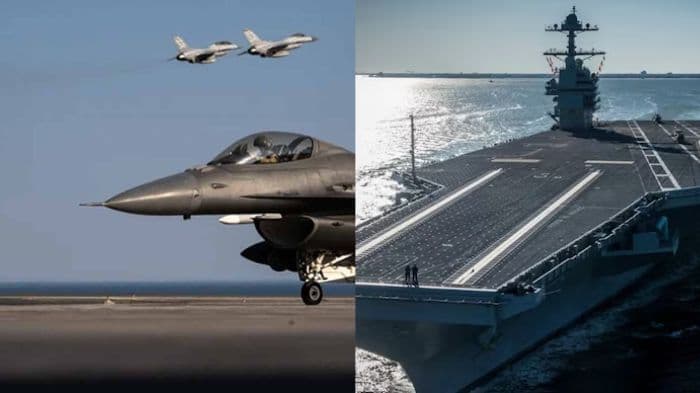
The United States has sharply increased its military presence in the Middle East, moving more than 50 fighter jets, including F-22, F-35 and F-16 aircraft, toward the region over the past 24 hours, even as high-stakes indirect negotiations between US and Iranian officials continue in Geneva.
Independent flight-tracking data and military aviation monitors recorded multiple advanced aircraft, accompanied by aerial refuelling tankers, heading toward the Middle East — a clear indication that Washington is positioning air assets for sustained operations if necessary.

A US official, who spoke on condition of anonymity, confirmed to news organisations that “more than 50 fighter jets have been moved to the region in the past 24 hours.”
The build-up comes as indirect nuclear negotiations between the United States and Iran, mediated by Oman, unfold in Geneva. Diplomats are seeking a diplomatic resolution to disputes over Tehran’s nuclear programme, though talks remain complex and unresolved.
Alongside the fighter jet deployment, US naval forces are also reinforcing their presence in the region. The USS Gerald R. Ford aircraft carrier strike group has sailed from the Caribbean and is en route to Middle East waters, sailing with guided-missile destroyers aboard, officials said, a sign of expanded maritime capabilities accompanying the aerial deployment.
Several US air and naval assets, including the carrier USS Abraham Lincoln strike group, were already in the region as part of routine rotations or previous positioning, and their presence has been extended in light of current tensions.
The air and naval reinforcements occur amid cautious diplomatic signals. US officials described the Geneva talks as making “progress,” though significant details remain to be worked out.
After meetings involving senior US envoys including Jared Kushner and Steve Witkoff, Iranian representatives indicated they would return in the coming weeks with more detailed proposals aimed at bridging gaps in the negotiations.
Iran’s Foreign Minister Abbas Araghchi described the discussions as “serious, constructive and positive,” saying there was now a “clearer path ahead,” even as he acknowledged that a final agreement was not imminent and political differences persisted.
Omani Foreign Minister Badr bin Hamad al-Busaidi, who mediated the talks, said the meetings concluded with progress in identifying common goals and technical issues, while stressing that additional work was needed to achieve tangible results.
The deployment of advanced US airpower alongside ongoing diplomacy underscores Washington’s dual approach of maintaining pressure while pursuing negotiated solutions on Iran’s nuclear programme.
Analysts say the balance between military reinforcement and dialogue reflects the complex dynamics of US–Iran relations at a critical moment in negotiations.