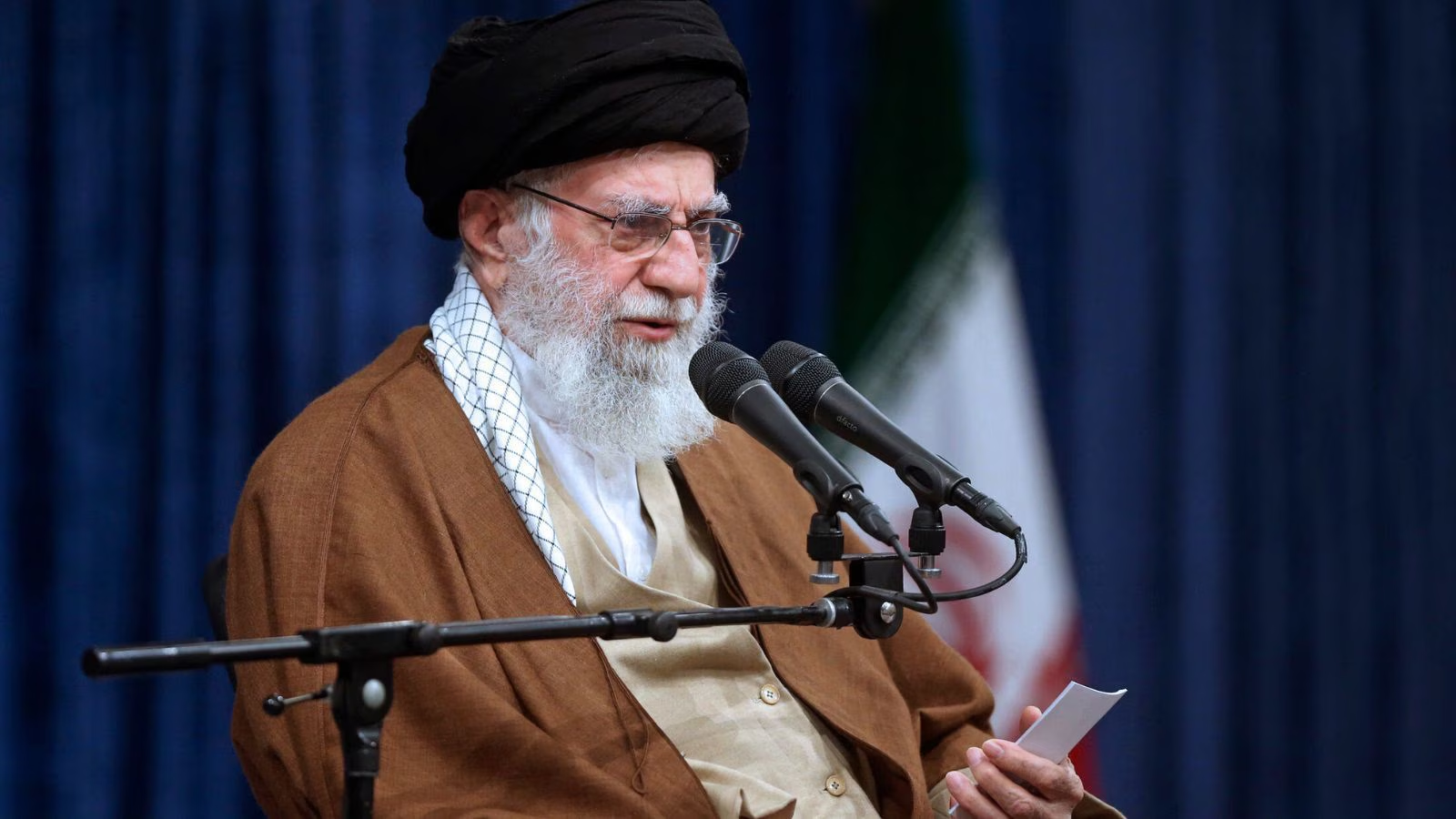
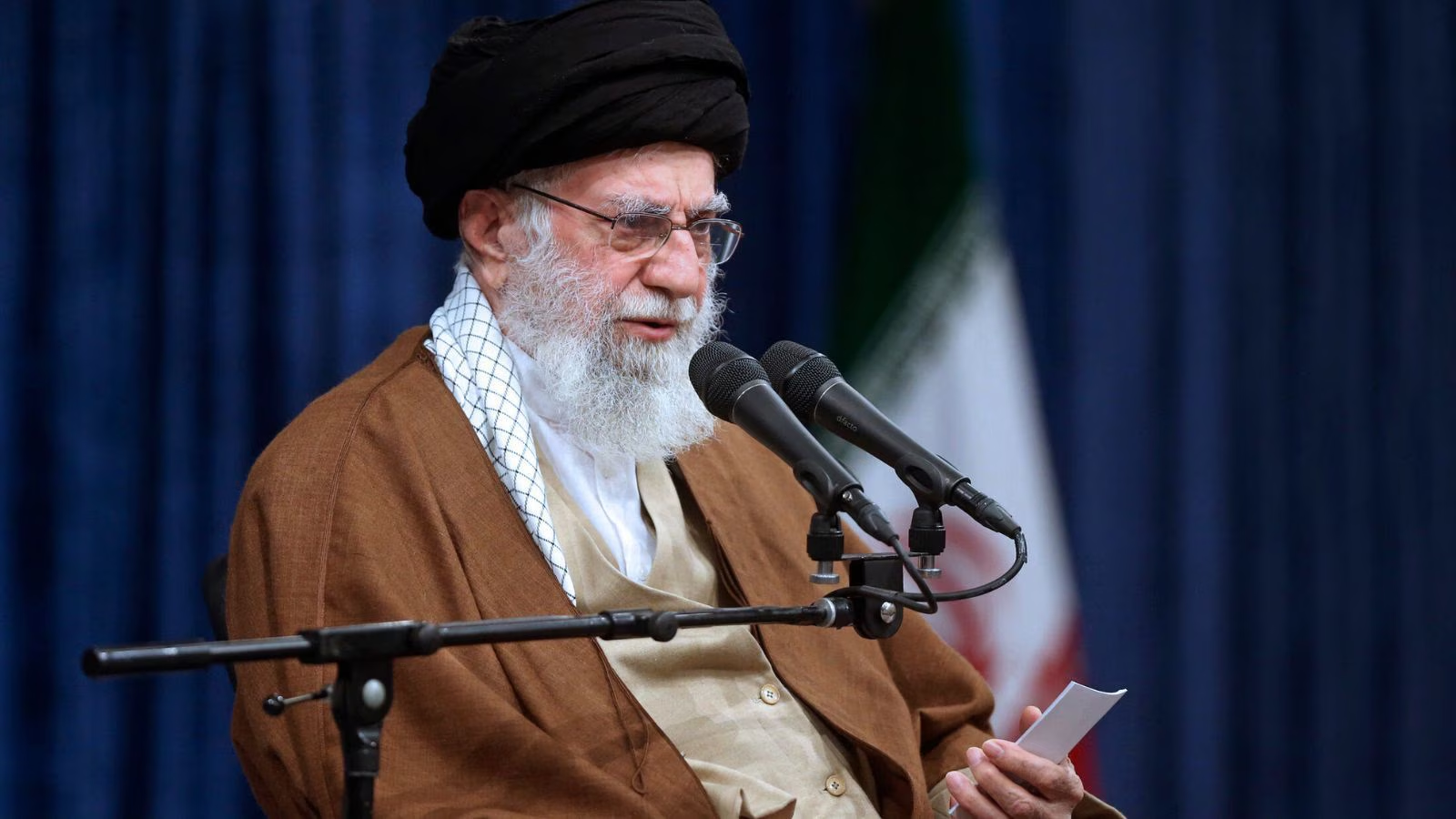
Senior Congress leader Sonia Gandhi has sharply criticized the central government’s response to the assassination of Iran’s Supreme Leader, Ayatollah Seyed Ali Hosseini Khamenei, calling the government’s silence “not neutrality, but abdication”.
Writing in the aftermath of Iran’s confirmation on March 1 that Khamenei had been killed in targeted strikes by the United States and Israel, Gandhi described the assassination of a sitting head of state during ongoing negotiations as a “grave rupture” in international relations — and questioned why New Delhi has refrained from unequivocally condemning the violation of Iranian sovereignty.

She argued that the initial response from Narendra Modi focused solely on Iran’s retaliatory strike on the UAE, without addressing the sequence of events that preceded it. Subsequent expressions of “deep concern” and calls for “dialogue and diplomacy,” she wrote, ring hollow when diplomatic engagement was already underway before what she termed the “massive, unprovoked attacks” by the US and Israel.
“When the targeted killing of a foreign leader draws no clear defence of sovereignty or international law from our country, serious doubts arise about the direction and credibility of our foreign policy,” Gandhi asserted.
‘Silence is not neutral’
Invoking Article 2(4) of the UN Charter, which prohibits the threat or use of force against the territorial integrity or political independence of any state, Gandhi warned that the targeted killing of a serving head of state strikes at the heart of the rules-based international order. If such actions pass without principled objection from the world’s largest democracy, she cautioned, the erosion of global norms becomes easier to normalize.
She also flagged the timing of the assassination, noting that it came less than 48 hours after the Prime Minister returned from Israel, where he reiterated support for the government of Benjamin Netanyahu, even as the Gaza conflict continues to draw international criticism over civilian casualties.
At a time when several Global South nations — and even India’s BRICS partners — have maintained distance, Gandhi said India’s “high-profile political endorsement without moral clarity” signals a troubling departure from its traditional diplomatic posture.
Congress condemns strikes, extends condolences
The Indian National Congress, she said, has unequivocally condemned the bombings and targeted assassinations on Iranian soil, calling them a dangerous escalation with grave regional and global consequences. The party has extended condolences to the Iranian people and Shia communities worldwide, reiterating that India’s foreign policy must remain anchored in the peaceful settlement of disputes, as reflected in Article 51 of the Constitution.
For India, Gandhi stressed, the episode is especially significant given its deep civilisational and strategic ties with Iran. She recalled Tehran’s role in 1994 in blocking efforts within the Organization of Islamic Cooperation to move a resolution against India at the UN Commission on Human Rights over Kashmir — a move that prevented the internationalization of the issue at a delicate economic moment.
Iran has also facilitated India’s diplomatic presence in Zahedan near the Pakistan border, providing a strategic counterweight to Gwadar port and the China-Pakistan Economic Corridor.
Gandhi further referenced former Prime Minister Atal Bihari Vajpayee’s 2001 visit to Tehran, during which he reaffirmed India’s deep civilizational and contemporary ties with Iran — a legacy she implied the present government appears to have sidelined.
Strategic autonomy at stake
While acknowledging the expansion of India’s ties with Israel in defense, agriculture and technology, Gandhi argued that it is precisely because New Delhi maintains relations with both Tehran and Tel Aviv that it has the diplomatic space to urge restraint. But that space, she said, depends on credibility — and credibility rests on adherence to principle rather than expediency.
“This is not merely a moral proposition; it is a strategic necessity,” she wrote, pointing out that nearly 10 million Indians live and work across the Gulf. In past crises — from the Gulf War to conflicts in Yemen, Iraq and Syria — India’s ability to safeguard its citizens has depended on its standing as an independent actor, not a proxy.
India’s post-Independence foreign policy, shaped by non-alignment, was conceived not as passive neutrality but as a conscious assertion of strategic autonomy, Gandhi noted. An uncritical silence in the face of unilateral military action by powerful states, she argued, signals a retreat from that legacy.
Call for parliamentary debate
Gandhi said the matter must be debated in Parliament when it reconvenes, asserting that the targeted killing of a foreign head of state, the erosion of international norms, and escalating instability in West Asia directly affect India’s strategic interests and moral commitments.
“For a country that seeks to represent the Global South, the optics of acquiescence carry real costs,” she wrote, warning that if sovereignty can be disregarded without consequence, smaller nations are left vulnerable to coercion.
Reiterating India’s long-invoked ideal of vasudhaiva kutumbakam — the world is one family — Gandhi said the principle demands a commitment to justice, restraint and dialogue, even when inconvenient.