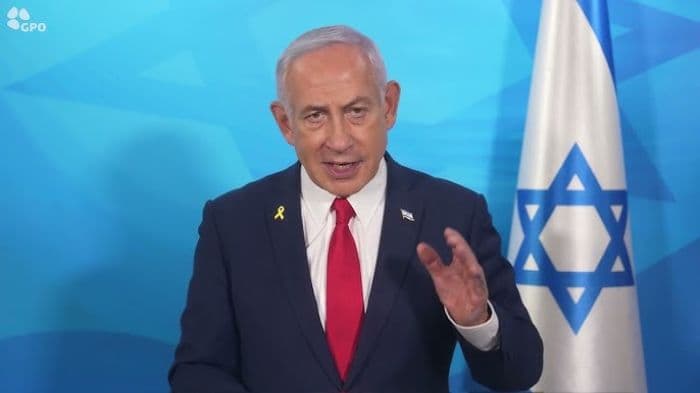
On the eve of Narendra Modi’s two-day visit to Israel from Feb 25 to 26, Israeli Prime Minister Benjamin Netanyahu has publicly outlined a vision for a new geopolitical framework he calls a “Hexagon of Alliances”, naming India as one of the core partners in the proposed arrangement.
Netanyahu’s remarks, made at a cabinet meeting and through official statements released ahead of the visit, signal an ambition to deepen cooperation among countries that share strategic concerns about “radical axes” in the Middle East, according to statements and analysis.

Netanyahu described the envisioned alliance as a network of nations — including India, Greece, Cyprus and other unnamed countries from the Arab world, Africa and Asia — that would work together to respond to what he termed both the “radical Shia axis” and the “emerging radical Sunni axis”.
He framed the initiative as a collective effort by states with converging views on security challenges and future goals, asserting that cooperation could “yield great results” and ensure resilience amid evolving threats.
The proposal comes at a time of heightened regional tensions, with lingering conflict between Israel and Iran and shifting dynamics involving other regional powers.
The so-called Hexagon concept echoes elements of broader geopolitical discussions about alliances and counterweights to Iran-linked coalitions and other groups.
Netanyahu has praised India as a “global power” with a growing strategic relationship with Israel, underscoring the personal rapport between the two leaders and the historical expansion of their bilateral ties.
The upcoming visit — Modi’s second to Israel following his landmark 2017 trip — is expected to include high-level discussions on diplomacy, technology, defence cooperation and emerging global challenges.
While the Hexagon framework remains a conceptual proposal at this stage, Netanyahu said it reflects his vision of countries that share similar perceptions of security realities and objectives standing together against common threats.
At the cabinet meeting where he described the plan, he emphasised that the alliance would unite nations “that see eye to eye” on challenges posed by radical groupings and regional instability.
India has historically maintained a foreign policy that values strategic autonomy and balanced relations across regions, including ties with West Asian states, and its engagement with any formal alliance structure remains subject to its diplomatic priorities and principles.
Modi’s state visit is expected to feature bilateral cooperation talks, including potential agreements on technology, innovation, defence and economic collaboration.
The Indian leader is also anticipated to address the Knesset, a rare honour for visiting heads of government, and engage with civil and diplomatic representatives on shared interests.
The Hexagon concept may feature in broader discussions as a backdrop to evolving geopolitics in the Middle East and beyond, underscoring the strategic weight both India and Israel attach to their relationship.